– Animation –
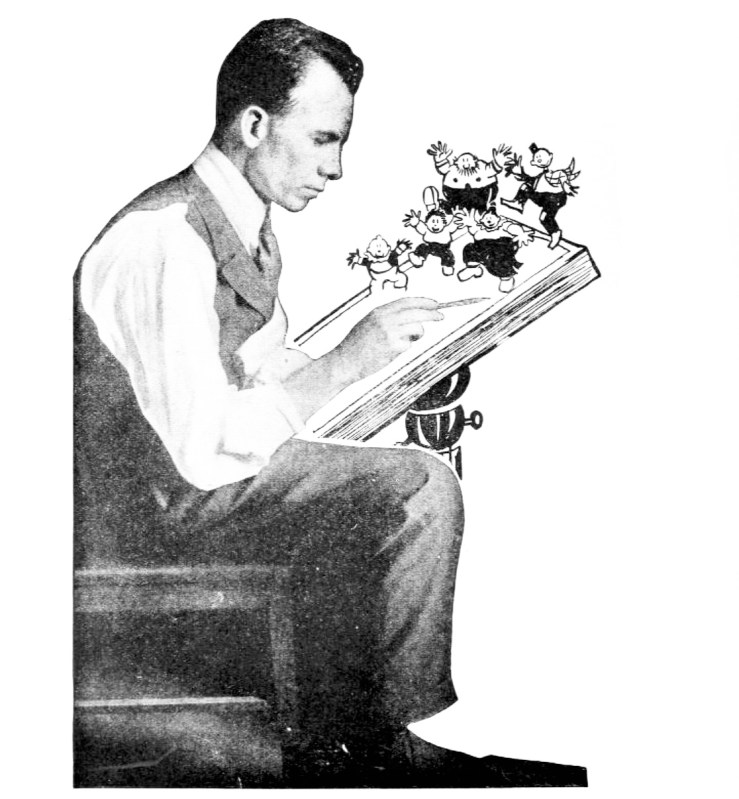
Animation Department:
Mutt and Jeff at the Pathé Frères company in 19131
- Mutt and Jeff at Sea Part 1 (03/03)
- Mutt and Jeff at Sea Part 2 (10/03)
- Mutt and Jeff in Constantinople (17/03)
- The Matrimonial Agency (24/03)
- Mutt and Jeff in Turkey (31/03)
- Mutt’s Moneymaking Scheme (07/04)
- The Sultan’s Harem (14/04)
- Mutt and Jeff in Mexico (21/04)
- The Sandstorm (28/04)
- Mutt Puts One Over (05/05)
- Mutt and Jeff (12/05)
- Mutt and Jeff (19/05)
- Mutt and Jeff (02/06)
- Baseball (09/06)
- The Merry Milkmaid (30/06)
- The Ball Game (07/07)
- Mutt and Jeff (24/07)
- Mutt’s Marriage (04/08)
Barré Studio
The Animated Grouch Chaser series
- Producer: Thomas A. Edison, Inc.
- Director: Raoul Barré
- Animator: Raoul Barré, Frank Moser, Gregory La Cava
- The Animated Grouch Chaser (17/03/1915)
- Cartoons in the Kitchen (04/05/1915)
- Cartoons in the Barber Shop (02/06/1915)
- Cartoons in the Parlor (16/06/1915)
- Cartoons in the Hotel (30/06/1915)
- Cartoons in the Laundry (14/07/1915)
- Cartoons on Tour (18/08/1915)
- Cartoons on the Beach (09/08/1915)
- Cartoons in a Seminary (22/09/1915)
- Cartoons in the Country (20/10/1915)
- Cartoons on a Yacht (10/11/1915)
- Cartoons in a Sanitarium (24/11/1915)

Stand alone animations
- Black’s Mysterious Box and Hicks in Nightmareland (15/12/1915).
- Producer: Thomas A. Edison, Inc.
- Director: Raoul Barré
- Animator: Raoul Barré, Frank Moser, Gregory La Cava
- This was the last animation from Barré Studio that was distributed by Edison. The Phables series were produced by William Randolph Hurst in preparation for what would become the International Film Service that La Cava headed.
Phables series
- Producer: International Film Service, William Randolph Hearst
- Director: Raoul Barré
- Story and author of comic: Thomas E. Powers
- Animator: Frank Moser, Leon A. Searl,
- Gregory La Cava (and supervisor)
- The Phable of Sam and Bill (17/12/1915)
- The Phable of a Busted Romance (24/12/1915)
- Feet Is Feet: A Phable (31/12/1915)
- A Newlywed Phable (07/01/1916)
- The Phable of a Phat Woman (14/01/1916)
- Who Said They Never Come Back (18/01/1916)
- Cooks Versus Chefs: The Phable of Olaf and Louie (21/01/1916)
- Bang Go the Rifles (24/01/1916)*
- ‘Twas but a Dream (24/01/1916)
- The Adventures of Mr Nobody Holme- He Buys a Jitney (31/01/1916)
- Never Again! The Story of a Speeder Cop (04/02/1916)
- Parcel Post Pete’s Nightmare (07/02/1916)
- Old Doc Glow (11/02/1916)*
- Parcel Post Pete: Not All His Troubles Are Little Ones (14/02/1916)
Maud the Mule series
- Producer: International Film Service, William Randolph Hearst
- Director: Gregory La Cava
- Story and author of comic: Frederick Burr Opper
- Animator: Bert Green
- Poor Si Keeler (04/02/1916)*
Director of Animation:
- Bang Go the Rifles (24/01/1916)
- Poor Si Keeler (04/02/1916)
- Old Doc Glow (11/02/1916)
International Film Service
Krazy Kat and Ignatz series
- Producer: International Film Service, William Randolph Hearst
- Director: Gregory La Cava
- Story and author of comic: George Herriman, Thomas E. Powers
- Animator: Frank Moser, Leon Searl, Bert Green, Edward Grinham, Gregory La Cava
- Introducing Krazy Kat and Ignatz Mouse (18/02/1916)
- Krazy Kat and Ignatz Mouse in Ignatz Believes in $ Signs (21/02/1916)
- Krazy Kat and Ignatz Mouse Discuss the Letter G (25/02/1916)
- Krazy Kat Goes A-Wooing (29/02/1916)
- Krazy Kat and Ignatz Mouse in A Duet, He Made Me Love Him (03/03/1916)
- Krazy Kat and Ignatz Mouse in Their 1-Act Tragedy, the Tale of the Nude Tail (06/03/1916)
- Krazy Kat – Bugologist (13/03/1916)
- Krazy Kat and Ignatz Mouse at the Circus (17/03/1916)
- Krazy Kat Demi-Tasse (20/03/1916)
- Krazy to the Rescue (24/03/1916)
- Krazy Kat, Invalid (27/03/1916)
- Krazy Kat at the Switchboard (03/04/1916)
- Krazy Kat the Hero (07/04/1916)
- Krazy Kat and Ignatz Mouse in a Tale That is Knot (14/04/1916)
- Krazy Kat at Looney Park (17/06/1916)
- A Sad Awakening (23/06/1916)
- A Grind-Iron Hero (09/10/1916)
- The Missing One (27/11/1916)
- Krazy Kat Takes Little Katrina for an Airing (19/12/1916)
- Throwing the Bull (04/02/1917)
- Roses and Thorns (11/03/1917)
- The Cook (26/04/1917)
- Moving Day (27/05/1917)
- All Is Not Gold That Glitters (24/06/1917)
- A Krazy Katastrophe (05/08/1917)
- Kats Is Kats (04/06/1920)
Maud the Mule series
- Producer: International Film Service, William Randolph Hearst
- Director: Gregory La Cava
- Story and author of comic: Frederick Burr Opper
- Animator: Bert Green, Gregory La Cava
- A Quiet Day in the Country (05/06/1916)
- Maud the Educated Mule (03/06/1916)
- Round and Round Again (02/10/1916)
Happy Hooligan series
- Producer: International Film Service, William Randolph Hearst
- Director: Gregory La Cava
- Story and author of comic: Frederick Burr Opper
- Animator: Frank Moser, Bill Nolan, Ben Sharpsteen, Jack King, Grim Natwick, Vernon Stalllings, John Foster, Gregory La Cava
- He Tries the Movies Again (09/10/1916)
- Ananias Has Nothing on Hooligan (20/01/1917)
- Ananias Has Nothing on Him (18/03/1917)
- The Double Cross Nurse (25/03/1917)
- The New Recruit (08/04/1917)
- Three Strikes You’re Out (26/04/1917)
- Around the World in Half an Hour (09/06/1917)
- The White Hope (29/07/1917)
- Happy Hooligan Gets the Razoo (02/09/1917)
- Happy Hooligan in the Zoo (09/09/1917)
- Happy Hooligan, the Tank (16/09/1917)
- Happy Hooligan in Soft (07/10/1917)
- At the Picnic (16/10/1917)
- Happy Hooligan in the Tale of a Fish (16/10/1917)
- Happy Hooligan in the Tale of a Monkey (25/11/1917)
- Happy Hooligan at the Circus (08/12/1917)
- Bullets and Bull (16/12/1917)
- Hearts and Horses (13/01/1918)
- All for the Ladies (10/02/1918)
- Doing His Bit (19/04/1918)
- Throwing the Bull (17/06/1918)
- Mopping Up a Million (22/07/1918)
- His Dark Past (05/08/1918)
- Tramp Tramp Tramp (12/08/1918)
- A Smash-Up in China (22/04/1919)
- The Tale of a Shirt (22/06/1919)
- A Wee Bit o’ Scotch (29/06/1919)
- Transatlantic Flight (20/07/1919)
- The Great Handicap (24/08/1919)
- Jungle Jumble (07/09/1919)
- After the Ball (28/09/1919)
- Business is Business (23/11/1919)
- The Great umbrella Mystery (17/04/1920)
- Turn to the Right Leg (02/06/1920)
- All for the Love of a Girl (15/06/1920)
- His Country Cousin (03/07/1920)
- Happy Hooldini (11/09/1920)
- Apollo (18/09/1920)
Jerry on the Job
- Producer: International Film Service, William Randolph Hearst
- Director: Gregory La Cava
- Story and author of comic: Walter C. Hoban
- Animator: Will Powers, Walter Lantz, Gregory La Cava
- Jerry Ships a Circus (13/11/1916)
- On the Cannibal Isle (18/12/1916)
- A Tankless Job (21/01/1917)
- Jerry Saves the Navy (18/02/1917)
- Jerry Takes A Day Off (26/04/1917)
- Quinine (20/05/1917)
- Love and Lunch (05/07/1917)
- On the Border (19/08/1917)
- Where Has My Little Coal Bin (06/09/1919)
- Pigs in Clover (10/11/1919)
- How Could William Tell? (26/11/1919)
- A Very Busy Day (23/03/1920)
- Spring Fever (21/04/1920)
- Swinging His Vacation 14/05/1920)
- The Mysterious Vamp / Luring Eyes (29/05/1920)
Bringing Up Father
- Producer: International Film Service, William Randolph Hearst
- Director: Gregory La Cava
- Story and author of comic: George McManus
- Animator: Frank Moser, Bert Green, Gregory La Cava
- Father Gets into the Movies (21/11/1916)
- Just like a Woman (14/12/1916)
- A Hot Time in the Gym (04/03/1917)
- The Great Hansom Cab Mystery (13/05/1917)
- Music Hath Charms (07/06/1917)
- The Hansom Cab Mystery (09/06/1917)
- He Tries His Hand at Hypnotism (08/08/1917)
The Katzenjammer Kids
- Producer: International Film Service, William Randolph Hearst
- Director: Gregory La Cava
- Story and author of comic: Rudolph Dirks
- Animator: George Stallings, John Foster, Gregory La Cava
- The Captain Goes a-Swimming (11/12/1916)
- Der Great Bear Hunt (08/01/1917)
- Der Captain is Examined for Insurance (26/01/1917)
- Der Captain Gives a-Flivvering (01/04/1917)
- Robbers and Thieves (12/04/1917)
- Sharks Is Sharks (26/04/1917)
- 20,000 Legs under the Sea (03/06/1917)
- Down Where the Limburger Blows (09/06/1917)
- Der Captain Discovers the North Pole (08/07/1917)
- Der Captain’s Valet (25/08/1917)
- By the Sad Sea Waves (16/10/1917)
- Der End of Der Limit (16/10/1917)
- The Mysterious Yarn (11/11/1917)
- Der Last Straw (16/11/1917)
- A Tempest in a Paint Pot (02/12/1917)
- Fat and Furious (23/12/1917)
- Peace and Quiet (30/12/1917)
- Der Captain’s Birthday (06/01/1918)
- Rub-a-Dud-Dud (27/01/1918)
- Policy and Pie (10/02/1918)
- Burglars (24/02/1918)
- Too Many Cooks (03/03/1918)
- Spirits (10/03/1918)
- Vanity and Vengeance (27/04/1918)
- The Two Twins (06/05/1918)
- His Last Will (13/05/1918)
- Der Black Mitt (20/05/1918)
- Fisherman’s Luck (27/05/1918)
- Up in the Air (03/06/1918)
- Swat the Fly (10/06/1918)
- The Best Man Loses (24/06/1918)
- Crabs Is Crabs (01/07/1918)
- A Picnic for Two (08/07/1918)
- A Heathen Benefit (15/07/1918)
- Pep (19/07/1918)
- War Gardens (01/08/1918)
Abie the Agent
- Producer: International Film Service, William Randolph Hearst
- Director: Gregory La Cava
- Story and author of comic: Harry Hershfield
- Animator: Gregory La Cava
- Iska Worreh (05/08/1917)
- Able Kabibble Outwitting His Rival (23/09/1917)
Hearst-Pathé News Cartoons
Previously known as Hearst-Vitagraph News Pictorial, this cartoon series was shown at the end of Hearst’s newsreels. A number of directors, such as F. M. Follett, Leighton Budd, and Hal Coffman, worked on this series with La Cava due to the increase in demand for war propaganda upon the United States entry into World War I. The cartoons were usually from the popular comic strips from the Hearst newspapers like the ones listed above, but occasionally they were from different strips like these:
- A Hard Cold Winter (10/01/1917)
- Up a Stump (14/02/1917)
- Freedom of the Seas (10/03/1917)
- Adventures of Mr. Common People (21/03/1917)
- Solid Comfort (24/03/1917)
- Mr. Common People’s Busy Day (28/03/1917)
- Peace Insurance (31/03/1917)
- Cartoon (11/04/1917)
- Heroes of the Past (21/04/1917)
- The Great Offensive (28/04/1917)
- Mr. Slacker (02/05/1917)
- Potato is King (05/05/1917)
- Her Crowning Achievement (16/05/1917)
- Have You Bought Your Liberty Bond? (23/05/1917)
- Both Good Soldiers (26/05/1917)
- When Will He Throw Off This Burden (30/05/1917)
- In The Garden Trenches (02/06/1917)
- Ten Million Men from Uncle Sam (09/06/1917)
- Liberty Loan of 1917 (13/06/1917)
- A Regular Man (04/07/1917)
- America Does Not Forget (18/07/1917)
- They All Look Alike to Me (04/08/1917)
- Growing Fast (15/08/1917)
- Koch the Kaiser (05/09/1917)
- Fall Styles for Men (12/09/1917)
- Buy a Liberty Bond (13/10/1917)
- It Has Cone at Last (04/11/1917)
- Which? (28/11/1917)
- The Handwriting in the Sky (01/12/1917)
- Dropping the Mask (19/01/1918)
- Every Little Bit Helps (30/01/1918)
- A New Shadow Haunts Autocracy (09/02/1918)
- Progress (12/02/1918)
- The Heritage (15/02/1918)
- The Threatening Storm (20/02/1918)
- The Glutton (23/02/1918)
- Cartoon (02/03/1918)
- Making an Example of Him (13/03/1918)
- Join the Land Army (06/04/1918)
- Cartoon (13/04/1918)
- Give Him a Helping Hand (20/04/1918)
Judge Rummy / Silk Hat Harry’s Divorce Suit
- Producer: International Film Service, William Randolph Hearst
- Director: Gregory La Cava
- Story and author of comic: Thomas “Tad” Morgan
- Animator: Gregory La Cava, Grim Gatwick, Jack King, Burton Gillett, Frank Moser, Isadore Klein
- Judge Rummy’s Off Day (19/08/1918)
- Snappy Cheese (22/033/1919)
- The Sawdust Trail (22/06/1919)
- The Breath of a Nation (29/06/1919)
- Good Night Nurse (24/08/1919)
- Judge Rummy’s Miscue (??/09/1919)
- Shimmie Shivers (21/04/1920)
- A Fitting Gift (07/05/1920)
- His Last Legs (25/05/1920)
- Smokey Smokes (06/06/1920)
- A Doctor Should Have Patience (19/06/1920)
- A Fish Story (03/07/1920)
- The Last Rose of Summer (17/07/1920)
- The Fly Guy (26/08/1920)
- Shedding the Profiteer (05/09/1920)
- The Sponge Man (22/09/1920)
- The Prize Dance (03/09/1920)
- Bear Facts (10/12/1920)
– Silent Film –

Two-Reelers
Gag-Man and scenario writer:
Torchy Comedies
- Torchy Takes a Chance (1921). Release Date: 18/12/1921
- Battling Torchy (1922). Release Date: 22/01/1922
- Torchy and Orange Blossoms (1922). Release Date: 26/03/1922
- Torchy’s Ghost (1922). Release Date: 30/04/1922
- Torchy’s Hold Up (1922). Release Date: 28/05/1922
- Torchy Steps Out (1922). Release Date: 25/06/1922
- Torchy’s Nut Sunday (1922). Release Date: 30/07/1922
- Torchy’s Feud (1922). Release Date: 27/08/1922
- Producer: Master Films and C. C. Burr
- Distributor: Educational Pictures
- Story: Sewell Ford
- Cinematographer: Charles E. Gilson
- Cast: Johnny Hines
- Preservation Status: Unknown. Lost.
As reported in Wild’s Daily (The Film Daily) on February 3, 1921, Educational Films and Master Films, Inc., through C. C. Burr, signed for an additional 12 Torchy comedies with Johnny Hines. These films were supposedly different to the prior Torchy comedies, as Burr discussed in a November 1921 interview for Motion Picture News, departing from the popular slapstick type of comedy. This was around the time La Cava got in contact with C. C. Burr, as La Cava had sued and left The International Film Service in January of that year. Details of the two-reelers La Cava worked as gag-man and scenario writer are in the press down menu.
Director:
Faint Hearts (1922)
The first of the thirteen “All-Star Comedies” series. Reported in the December 2, 1922, issue of Exhibitors Herald, the W. W. Hodkinson Corporation announced that beginning December 3rd at least one of these “All-Star Comedies” will be released a month. All of these to be directed by Gregory La Cava and with a cast headed by Charles Murray and Raymond McKee.
- Producer: C. C. Burr Pictures for All-Star Comedies
- Distributor: W. W. Hodkinson Corp.
- Director: Gregory La Cava
- Release Date: 03/12/1922
- Cast: Charles Murray, Mary Anderson, Raymond McKee
- Preservation Status: Unknown. Lost.
The story centres around the matrimonial ambitions of a young married couple, whose hopes of future happiness are based on expectations of inheriting “uncle’s” fortune.
“Swift action, clever stunts, and an O’Henryesque twist at the end, pull this comedy up considerably and produce enough laughs to make up for a rather slow beginning. In his efforts to out-Doug Fairbanks, because the latter is his sweetheart’s ideal, the timid lover swings into a top-story window, runs across the roofs of moving autos, climbs up a pipe, and beats up a rival. The girl’s father, an irate politician, has some funny antics with a toy balloon. To get into a hospital, the lover goes through a few good stunts, finally landing there on a banana peel.” – Review from The Film Daily, December 10, 1922

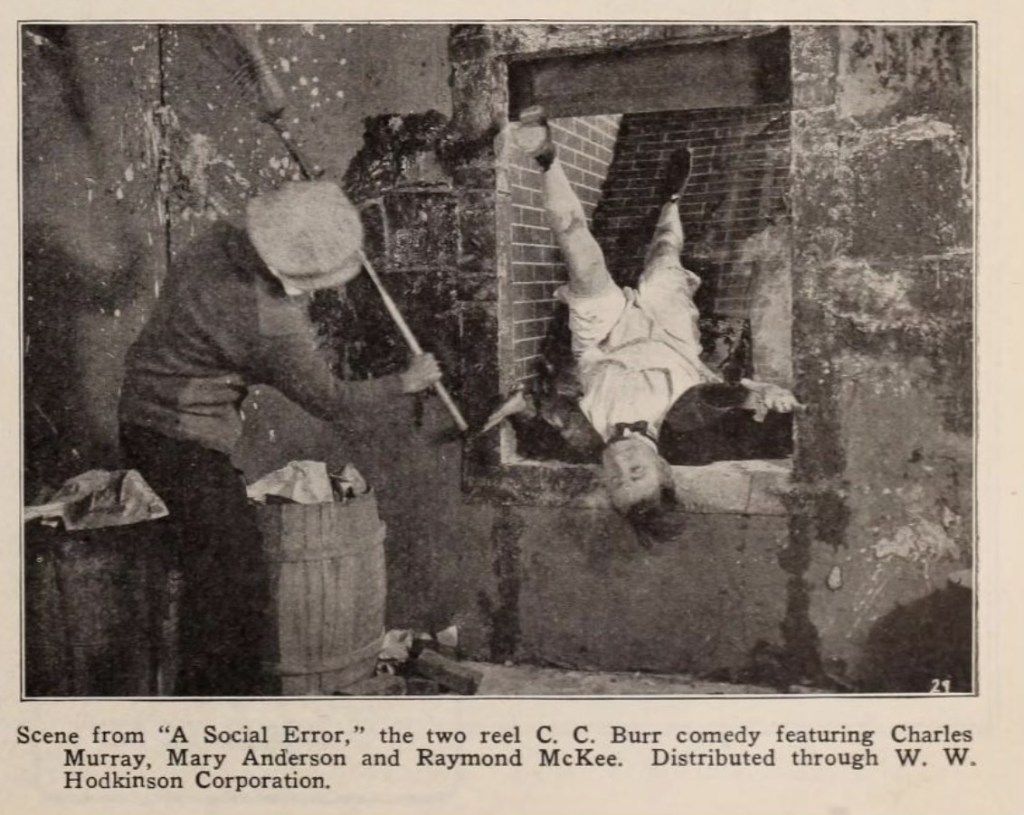
A Social Error (1922)
- Producer: C. C. Burr Pictures for All-Star Comedies
- Distributor: W. W. Hodkinson Corp.
- Director: Gregory La Cava
- Release Date: 31/12/1922
- Cast: Charles Murray, Mary Anderson, Raymond McKee, Flora Finch, Georgia Russel
- Preservation Status: Extant!. Found in Huggins 16mm collection purchase.
“A sprightly little comedy with the customary’ slap-stick situations, in which the action is kept at a good pace all the way through. It concerns a socially ambitious wife and her uncouth husband. It is well staged and Charlie Murray is the center of the fun making. Raymond McKee and Flora Finch lend good support.” – Review from Exhibitors Herald, January 27 1923.
The Four Orphans (1923)
- Producer: C. C. Burr Pictures for All-Star Comedies
- Distributor: W. W. Hodkinson Corp.
- Director: Gregory La Cava
- Release Date: 28/01/1923
- Cast: Charles Murray, Mary Anderson, Raymond McKee
- Preservation Status: Unknown. Lost.

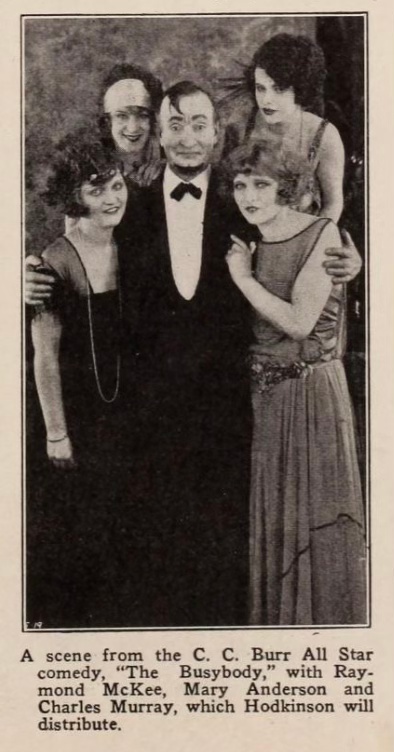
The Busybody (1923, also known as “The Nuisance”)
- Producer: C. C. Burr Studios for All-Star Comedies
- Distributor: W. W. Hodkinson Corp.
- Director: Gregory La Cava
- Release Date: 25/03/1923
- Cast: Charles Murray, Mary Anderon, Raymond McKee
- Preservation Status: Unknown. Lost.
“Some good audience stuff is contained in this two reeler which stars Mary Anderson, Raymond McKee and Charles Murray, and has been directed by Gregory La Cava. The continuity is somewhat choppy, jumping from one sequence to another that is not related at times, but in the main the comedy should get over well. There is some funny business in a haunted house that has sliding panels and all sorts of trick apparatus that is worked by switches in the cellar.The hero has a bet that he cannot stay there overnight. A cat gets in the cellar and after experimenting with the switches finally manages to set fire to a can of dynamite and blows up the place. Earlier in the picture there is a sequence which some may object to. A bowl of goldfish is overturned and its contents empty into Murray’s trousers. Incidentally, he is talking to the Minister’s wife. Some of the fish slide out on the floor and the family cat jumps up and sticks its head inside the trousers, obviously after the fish.” – Review from Film Daily, 1923.
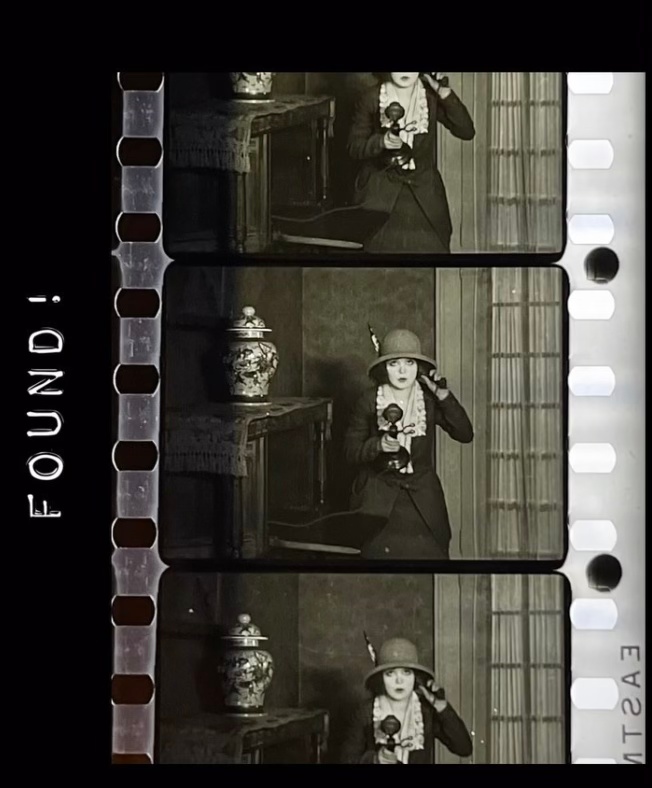
The Pill Pounder (1923)
In one of the greatest finds of 2024, La Cava’s The Pill Pounder was found in a yard sale in Omaha at $20. Pamela Hutchinson covers the story in The Guardian.
- Producer: C. C. Burr Studios for All-Star Comedies
- Distributor: W. W. Hodkinson Corp.
- Director Gregory La Cava
- Release Date: 22/04/1923
- Cast: Charles Murray, Clara Bow, Raymond McKee
- Preservation Status: Extant
“This is, on the whole, a regulation slap-stick comedy with Charles Murray as the featured player. There are however, some really funny sequences that keep things from getting slow. One of these is the poker game bit with the players switching cards with Murray whenever he leaves the table. The result is that they give him a winning hand, much to their chagrin. Another good bit is the slow-motion stuff inserted after Murray gives Jimmie an over-dose of bromo-seltzer and we see him slowly sailing out of the door. This should have no trouble getting over, especially where Murray is liked, although some of the humor is a trifle broad.” – Review from The Film Daily, 1923.
Annabel’s note: La Cava returned to the slow-motion effects later in his silent feature, Feel My Pulse (1928).
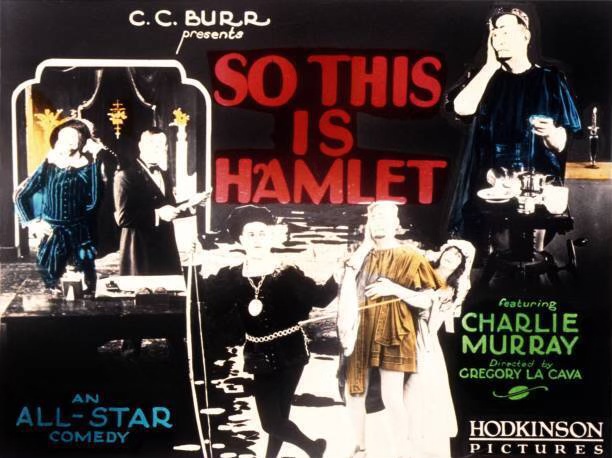
So This Is Hamlet (1923)
In a playing with the theatrics of 17th century performance La Cava later returns to with The Affairs of Cellini (1934), So This Is Hamlet parodies the stage and screen with a production company attempting to make a film of Hamlet.
- Producer: C. C. Burr Pictures for All-Star Comedies
- Distributor: W. W. Hodkinson Corp.
- Director: Gregory La Cava
- Release Date: 20/05/1923
- Cast: Charles Murray, Dorothy Walters, Raymond McKee, Felix Adler, Charlie Hines, Billy Neil, Dan Duffy, Russell Griffin
- Preservation Status: Unknown. Lost.
“There is a fairly new idea in the plot of this C. C. Burr comedy which features Charles Murray and a cast including Felix Adler, Charles Hines, Dorothy Allen and Dot Walters, and it will probably be liked very much where burlesque comedy goes well. Charlie and his partner are in the fur business and the firm of Fein and Klein is doing well until it takes a fier in the picture producing game. They start by producing “Hamlet” with variations, and the finished picture is finally thrown on the screen of their “rejection” room. The rest of the footage shows the picture as produced by them, with occasional cut-backs to Fein and Klein watching the critics’ faces at the first showing. The titles are good and there is some funny stuff built around some of the well-known lines. For instance, when the King finds a bottle of hootch labeled “Yorick” buried in a grave the title “Alas pure Yorick, I knew you well,” is inserted. The comedy would have been better as a whole if they had not let the burlesque run so long.” – Review from Film Daily, 1923
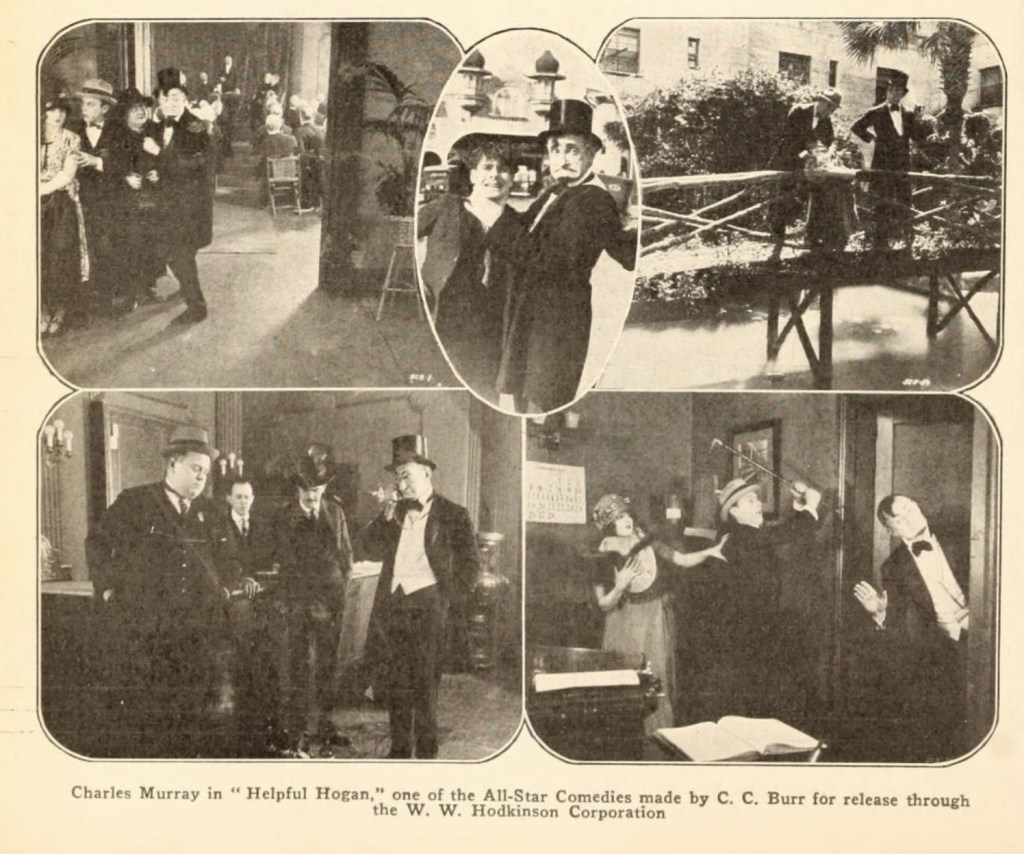
Helpful Hogan (1923)
- Producer: C. C. Burr Pictures for All-Star Comedies
- Distributor: W. W. Hodkinson Corp.
- Director: Gregory La Cava
- Release Date: 17/06/1923
- Cast: Charles Murray Raymond McKee
- Preservation Status: Unknown. Lost.
“Charlie Murray is the star of this two reel All Star Comedy made by C. C. Burr and distributed by Hodkinson. He portrays the role of a man who is always seeking to help others and continually gets into trouble. There is quite a little slap-stick and knock-about stuff in this comedy together with a number of amusing situations and it ranks with the best of the comedies in this series.” – Review from The Moving Picture World, July 14, 1923.
Wild and Wicked (1923)
- Producer: C. C. Burr Pictures for All-Star Comedies
- Distributor: W. W. Hodkinson Corp.
- Director: Gregory La Cava
- Release Date: 15/07/1923
- Cast: Charles Murray, Kathlene Martyn, Raymond McKee
- Preservation Status: Unknown. Lost.
“This All Star Comedy, produced by C. C. Burr for Hodkinson release, presents Charles Murray in the role of a crooked gambler. The story moves against a typical western background with mad-riding cowboys and scalping Indians adding to the atmosphere of the wildand-woolly setting. The comedy element takes its rise from the fact that Murray on arriving in town is mistaken by the sheriff as the new deputy sheriff and given the customary badge of authority. With this symbol of power on his breast he promptly returns to the bar-room whence he has been kicked out for crooked card playing and cleans out the saloon.” – Review from Motion Picture News, July 21, 1923.
The Fiddling Fool (1923)
- Producer: C. C. Burr Pictures for All-Star Comedies
- Distributor: W. W. Hodkinson Corp.
- Director: Gregory La Cava
- Release Date: 12/08/1923
- Cast: Charles Murray, Kathlene Martyn, Raymond McKee
- Preservation Status: Unknown. Lost.
“Raymond in his boyhood days has been taught that music has the power to accomplish most anything. Therefore, whenever he is confronted by problems in later life he has recourse to his trusty violin; no matter what the circumstances the fiddle bears the brunt of the emergency. When he is pursued by his irate boss, driven to distraction over his income tax, Raymond wards off the impending onslaught by madly bowing the strings. Later, he is attacked by his rival in love and again, the violin is brought into play. His boss and rival “frame” him into a ring battle with a heavyweight slugger and before the battle finishes the fiddle has served its part. And the principal comedy moments proceed from the fact that in each instance it is the violin which, actually or to all appearances, assists Raymond to vanquish his adversaries. This is a thoroughly enjoyable comedy with a really humorous theme cleverly handled. Raymond McKee, Charley Murray and Kathlene Martyn appear in the principal roles.” – Review from Motion Picture News, August 25, 1923.
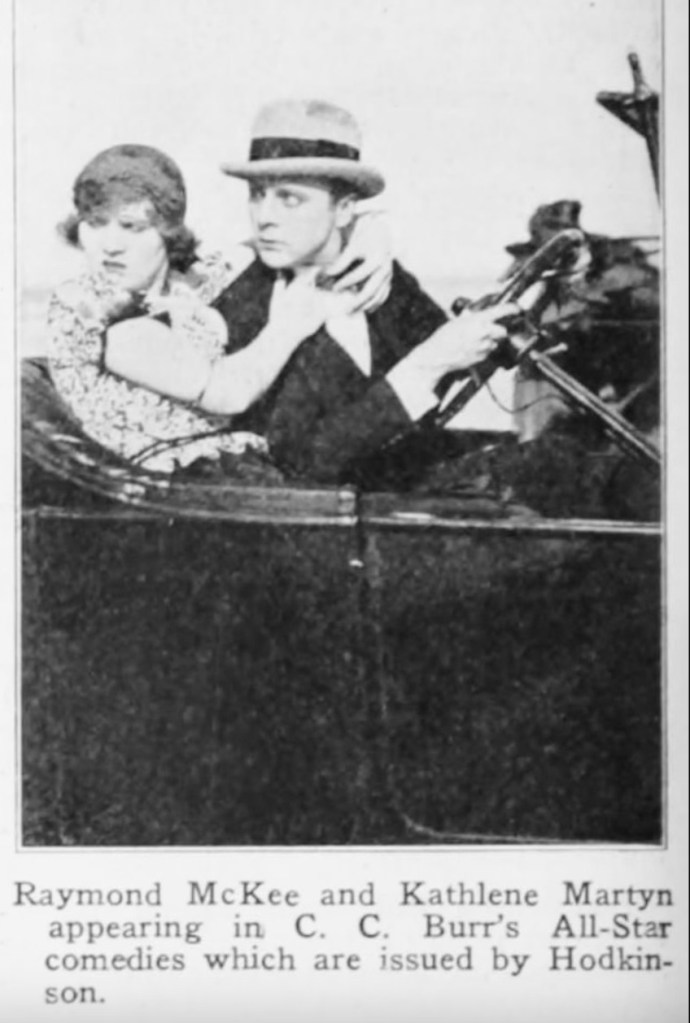
The Life of Reilly (1923)
- Producer: C. C. Burr Pictures for All-Star Comedies
- Distributor: W. W. Hodkinson Corp.
- Director: Gregory La Cava
- Release Date: 14/10/1923
- Cast: Charles Murray, Raymond McKee, Kathlene Martyn
- Preservation Status: Unknown. Lost.
“This one has to do with the attempt of Reilly (Charles Murray) to do away with a dog that his wife loves. And the dog is certainly made to understand that he is an unwelcome guest in the house, for he is subjected to abuses galore and those who have a liking for canine may resent the stunts, through which this fuzzy-haired pup is put. Just how many laughs there is in this comedy, which was made by C. C. Burr, depends entirely on just how Charley Murray stands. He personally strives hard to get laughs and keeps things moving, but the gags are not always the kind that will bring laughs.” Review by Roger Ferri for Motion Picture News, October 27, 1923.
Beware of the Dog (1923)
- Producer: C. C. Burr Pictures for All-Star Comedies
- Distributor: W. W. Hodkinson Corp.
- Director: Gregory La Cava
- Release Date: Unknown
- Cast: Charles Murray, Raymond McKee, Kathlene Martyn
- Preservation Status: Unknown. Lost.
Features
Gag-Man:
The Shock Punch (1925)- link to watch online
- Producer: Famous Players-Lasky
- Distributor: Paramount Pictures
- Director: Paul Sloane. La Cava directed the last two reels.
- Writer (Scenario): Luther Reed. Adapted from The Shock Punch by John Monk Saunders
- Gag Man: Gregory La Cava
- Cinematographer: William Miller
- Art Director: Ernest Fegte
- Release Date: 25/02/1925
- Running time: 60 minutes (6 reels)
- Preservation Status: Extant
- Cast:
- Richard Dix (Randall Lee Savage)
- Frances Howard (Dorothy Clark)
- Theodore Babcock (Dan Savage)
- Percy Moore (Jim Clark)
- Charles Beyer (Stanley Pierce)
- Edward “Gunboat” Smith (Terence O’Rourke)
- Jack Scannell (Mike)
- Walter Long (Bull Malarkey)
- Paul Panzer (Giuseppi)
I briefly discussed Gregory La Cava’s time as a boxer in high school my post about his fine art studies, but it is worth mentioning again as La Cava repeatedly turned to boxing in film. In The Shock Punch, Dix is the son of a businessman, whose father prepares him for the business world by having him trained as a boxer. He falls in love with a girl (Frances Howard) while in Central Park and takes up working under her father as a riveter to get closer to her.
Too Many Kisses (1925)- link to watch online
- Producer: Famous Players–Lasky
- Distributor: Paramount Pictures
- Director: Paul Sloane
- Writer (Scenario): Gerald Duffy. Adapted from the 1923 story A Maker of Gestures by John Monk Saunders
- Gag Man: Gregory La Cava
- Cinematographer: Hal Rosson
- Release Date: 01/03/1925
- Running time: 60 minutes (6 reels)
- Preservation Status: Extant
- Cast:
- Richard Dix (Richard Gaylord, Jr.)
- Frances Howard (Yvonne)
- William Powell (Captain Julio)
- Frank Currier (Richard Gaylord, Sr.)
- Joseph Burke (Joab Simmons)
- Albert Tavernier (Manuel Hurja)
- Paul Panzer (Pedro)
- Harpo Marx (The Village Peter Pan)
Primarily known for being the Harpo Marx’s only film with his brothers and his only “speaking” role, Too Many Kisses features Dix as a modern day Lothario. Dix is sent by his father to the Basque region of France, by the understanding that the women there only desire their own people, just for Dix to continue his seductive escapades there.
The Lucky Devil (1925)- link to watch online
- Producer: Famous Players–Lasky
- Distributor: Paramount Pictures
- Director: Frank Tuttle. Reportedly, La Cava directed the last two reels2
- Writer (Scenario): Townsend Martin. Story by Byron Morgan
- Gag Man: Gregory La Cava
- Cinematographer: Alvin Wyckoff
- Art Director: Julian Boone Fleming
- Release Date: 13/07/1925
- Running time: 63 minutes (6 reels)
- Preservation Status: Extant
- Cast:
- Richard Dix (Randy Farman)
- Esther Ralston (Doris McDee)
- Edna May Oliver (Mrs. McDee)
- Tom Findley (Franklyn, Sr.)
- Anthony Jowitt (Rudolph Franklyne)
- Joseph Burke (The Professor)
- Mary Foy (Mrs. Hunt)
- Edward “Gunboat” Smith (Sailor Sheldon)
- Charles Sellon (Sheriff)
- Charles Hammond (Tobias Sedgmore)
- Charles McDonald (Tom Barrity)
- George Webb (‘Frency’ Rogers)
- Eddie James (‘Dutch’ Oldham)
Dix’s Randy Farman wins a racing car in a raffle in The Lucky Devil. Farman heads out West and on his way he loses all of his money and falls in love with a girl named Doris (Esther Ralston). To win Doris’s love, and get his money back, Farman enters a car race. A boxing fight similarly features in this film as The Shock Punch, in another “against the odds” scenario against professional fighter “Gunboat” Smith.
Director:
La Cava directed a few feature films before heading to Hollywood in 1925 to work at Famous Players-Lasky. His Nibs to The New School Teacher were all filmed at Nassau and Burr’s Glendale Studio in Long Island City, Queens, New York.
His Nibs (1921)
Emanuela Martini compiles3 La Cava’s filmography with listing HIS NIBS under La Cava’s short films, but the film being just under 60 minutes is why I’m tentatively listing it under La Cava’s feature length films. HIS NIBS comes at an odd time in La Cava’s filmography, as he doesn’t direct another feature until 1924 under C. C. Burr.
- Producer: Exceptional Pictures
- Distributor: “His Nibs” Syndicate
- Director: Gregory La Cava
- Writer: Arthur Hoerl. Kingsley Canham believes La Cava also contributed to the writing4
- Cinematographer: William H. Tuers and A. J. Stout
- Editor: Arthur Hoerl
- Release Date: 22/10/1921
- Running time: 56 minutes (5 reels)
- Cast:
- Charles “Chic” Sale (The Boy, Theodore Bender, “His Nibs”/Miss Dessie Teed, theater organist/Wally Craw, local weather prophet/Mr. Percifer, editor of The Weekly Bee/Elmer Bender/Peelee Gear Jr., boy tenor)
- Colleen Moore (The Girl)
- Joseph Dowling (The Girl’s Father)
- J. P. Lockney (Old Sour Apples)
- Walt Whitman (The Boy’s Father)
- Lydia Yeamans Titus (The Boy’s Mother)
- Harry Edwards (First Villain)
- Preservation Status: Extant. Print survives in the UCLA Film and Television Archive
La Cava engages with his audience in the most direct way with His Nibs with this slapstick spoof on what goes inside the cinema theatre of The Slippery Elm Picture Palace. Sale plays a variety of different roles in the film and within the film within this film.
Restless Wives (1924)
Arguably La Cava’s first feature film with C. C. Burr at All Star Comedies, as previously mentioned, with HIS NIBS being just under feature length.
- Producer: C. C. Burr Pictures for All-Star Comedies
- Distributor: Educational Pictures
- Director: Gregory La Cava
- Writer: Mann Page. Intertitles by Raymond S. Harris. Adapted from Restless Wives by Izola Forrester
- Cinematographer: John W. Brown
- Editor: Raymond S. Harris
- Special Effects: Harry Redmond Sr.
- Release Date: 01/01/1924
- Running time: Around 80 minutes (confirmed 7 reels)
- Cast:
- Doris Kenyon (Polly Benson)
- James Rennie (James Benson)
- Montague Love (Hugo Cady)
- Edmund Breese (Hobart Richards)
- Burr McIntosh (Pelham Morrison)
- Coit Albertson (Curtis Wilbur)
- Naomi Childers (Mrs. Drake)
- Maud Sinclair (Mrs. Cady)
- Edna May Oliver (Benson’s Secretary)
- Richard Thorpe (The Lawyer)
- Fern Oakley (The Maid)
- Donald Bruce (Butler)
- Tom Blake (Dorgan)
- Preservation Status: Unknown, believed lost. A trailer survives
A manuscript detailing the narrative survives at the Library of Congress, and has been made digitally accessible here. For a brief synopsis of the film, Doris Kenyon’s Polly is neglected by her husband (James Rennie), and when he misses their wedding anniversary party, Polly accepts Curtis Wilbur’s invitation to go to a Cabaret and later returns to live with her father. Her husband becomes jealous and comes up with the hare-brained scheme to kidnap her and, naturally, they are romantically reunited.
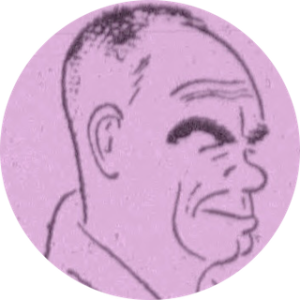
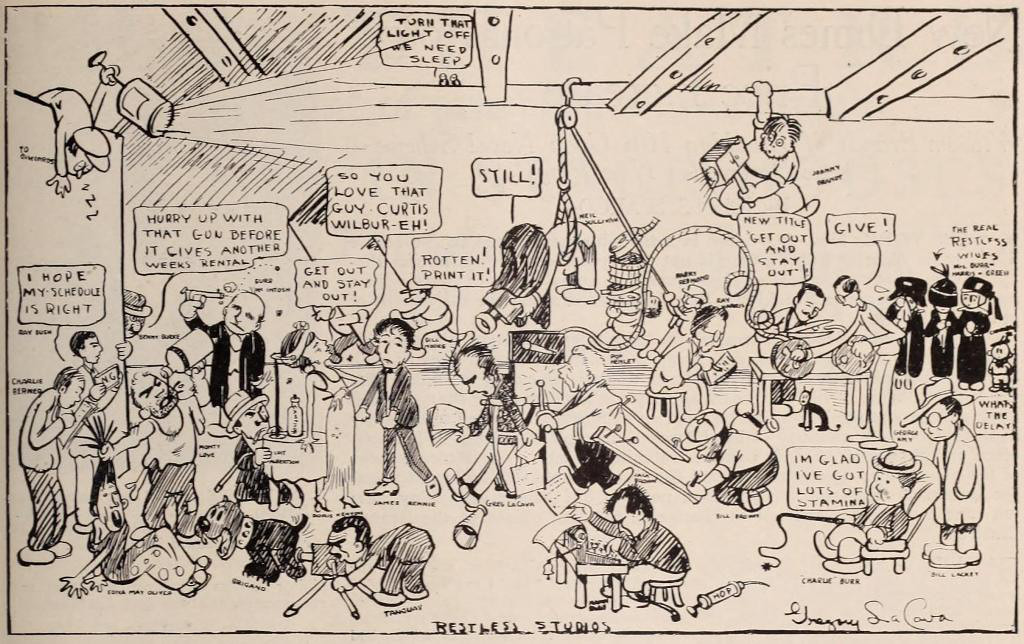
A strained production that culminated in La Cava’s caricature below, Restless Wives was made in seventeen days with the production cost of $35,000 — and the strain was memorable for La Cava to later recall the film in an interview for Motion Picture Classic in May 1926: “In the early stages of his career,” says La Cava, “one picture may well ruin a director. Making pictures with so small a budget was — well, to say the least, risky. If, for an extra five dollars I could make the picture look as tho another thousand had been spent on it, the picture had to remain looking a thousand dollars cheaper! “But the risk was the main thing. For, one breaking into the game must watch his step. If it rains, they fire the director!” Unfortunately, the film appears to be lost, so there’s little way of telling if he managed to pull it off contrary to La Cava’s statement.
The New School Teacher (1924)
- Producer: C. C. Burr Pictures
- Distributor: Associated Exhibitors
- Director: Gregory La Cava
- Writer: Raymond S. Harris and Gregory La Cava. Adapted from the 1923 stories “Lover’s Leap” and “Young Nuts of America” by Irvin S. Cobb
- Cinematographer: William McCoy and Neil Sullivan
- Release Date: 01/06/1924
- Running time: 52 minutes (6 reels)
- Cast:
- Charles “Chic” Sale (Professor Timmons)
- Polly Archer (Diana Buck)
- Russell Griffin (Waldo Buck)
- Robert Bentley (Wales, Diana’s fiancé)
- Leslie King (Arsonist)
- Harlan Knight (Farmer with rifle)
- Preservation Status: Extant. Link to watch online
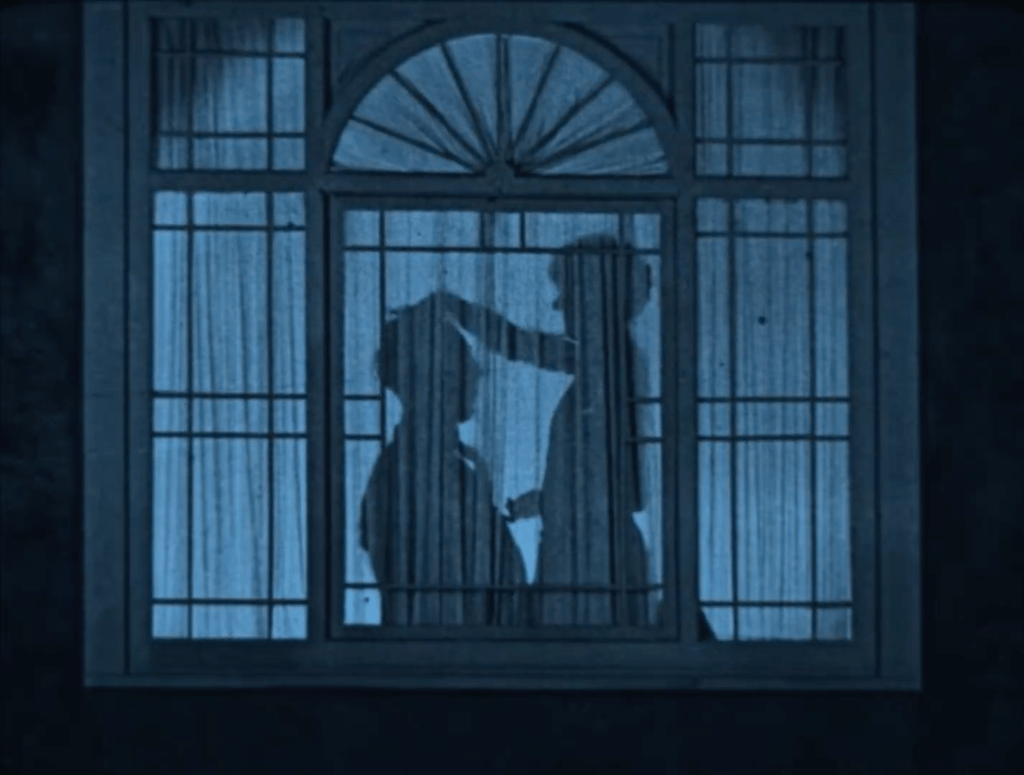
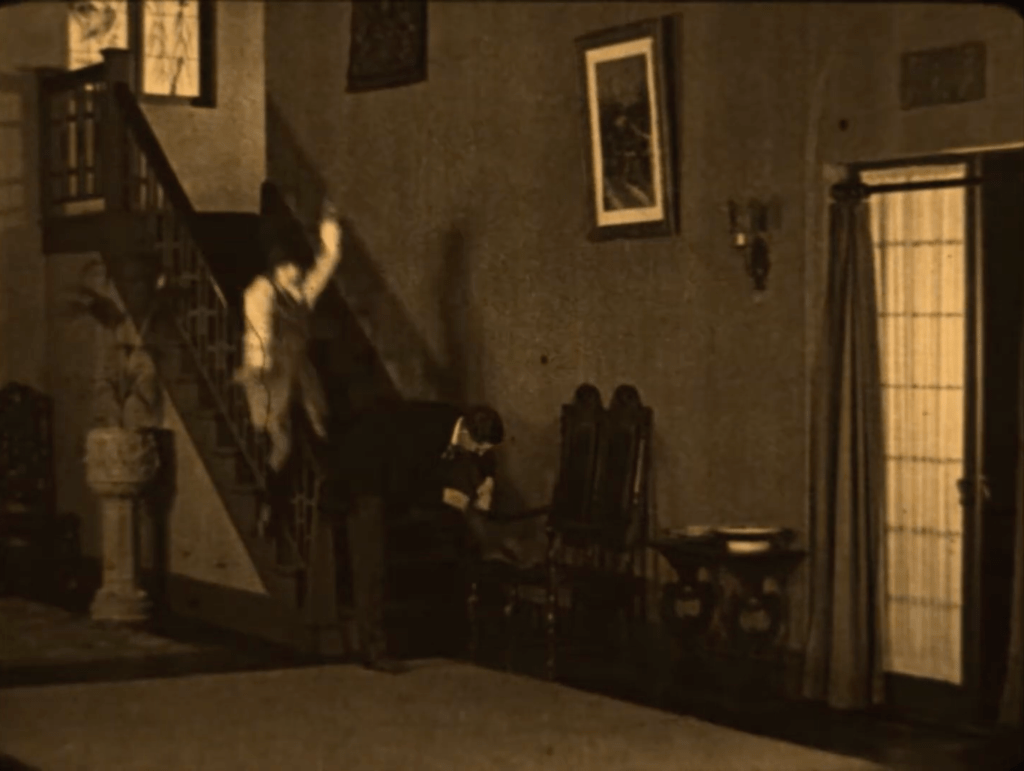
Sale’s plays it straight as a flustered professor in La Cava’s second film with him. Arriving in a new town, Professor Timmons quickly becomes the subject of the students torment but is redeemed in the eyes of his students and the town as he saves the school from an arson. The New School Teacher shines, to me, in the scenes with Polly Archer’s free-spirited Diana Buck; a character and performance style that is reminiscent of La Cava’s later leading female characters. What starts as a ploy to mess with her fiancé becomes a rather sweet romance between Archer and Sale’s characters. On some sites Doris Kenyon is listed in the cast list as a “Diana Pope”, but the intertitle lists Diana Buck as being played by Polly Archer and she does not look like Kenyon. Maybe I’m wrong, but thought I would add that in case anyone was wondering why I didn’t include her name in the cast list.
Womanhandled (1925)
- Producer: Famous Player-Lasky
- Distributor: Paramount Pictures
- Director: Gregory La Cava
- Writer: Luther Reed. From Arthur Stringer’s 1925 story in The Saturday Evening Post
- Cinematographer: Edward Cronjager
- Editor: William LeBaron
- Art Director: Ernst Fegté
- Release Date: 28/12/1925
- Running time: 70 minutes (7 reels)
- Cast:
- Richard Dix (Bill Dana)
- Esther Ralston (Molly Martin)
- Cora Williams (Aunt Clara)
- Olive Tell (Lucy Chatham)
- Edmund Breese (Uncle Lester)
- Margaret Morris (Iris Vale)
- Tammany Young (Spike)
- Eli Nadel (The Pest)
- Basset Blakely (Cow Hand)
- Edgar Nelson (Pinky)
- Preservation Status: Extant. A print survives at the Library of Congress. Link to watch online
Richard Dix is Bill Dana, a relaxed leisure seeking playboy that we first meet throwing peanuts to squirrels in Central Park next to two homeless men, showing glimpses of that social class divide La Cava was interested in examining and playing with, when he meets Molly Martin (Esther Ralston). Molly expresses her interest in more masculine men so Bill goes out west to find out the contemporary west isn’t much like the movie westerns at all. La Cava’s depiction of modern west life is what particularly makes the film stand out. Contemporary viewers noted this style of La Cava, as Sally Benson writes for Picture-Play magazine in April 1926, that “La Cava wasn’t satisfied to shut off his camera when the hero and heroine cling together in that parting embrace. He carried his action on to a little bit, exceedingly well done, of two hobos reading the society columns of the daily newspaper, which some one has left on a park bench. Little things like these make a picture.”
Womanhandled was La Cava’s first credited directorial work in Hollywood. La Cava became touted as the “director to watch” from Paramount, and received the full treatment, fan magazine interviews and all. One of the earliest interviews with La Cava in Hollywood as a director came out of his work with Richard Dix for Motion Picture Classic magazine in May 1926. One claim made by this interview, and later career assessments of Dix and La Cava from this period, is that Dix asked for La Cava to direct his next film following The Lucky Devil, and this is substantiated by La Cava’s close friendship with Dix in the years following despite ceasing making films with Dix after the transition to sound.
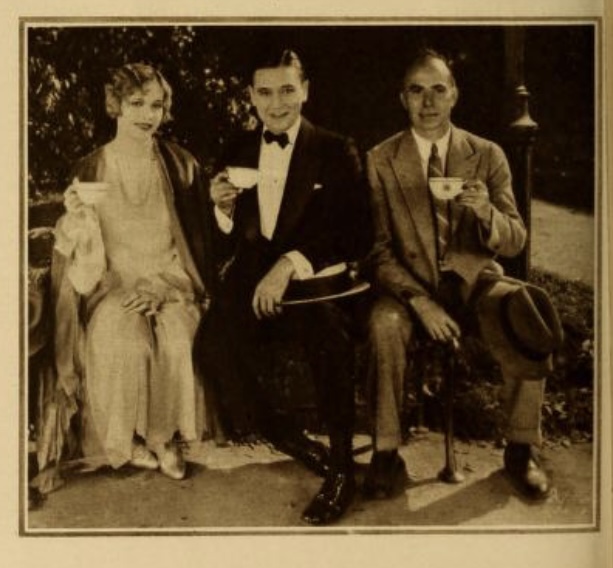
Let’s Get Married (1926)
- Producer: Famous Player-Lasky
- Distributor: Paramount Pictures
- Director: Gregory La Cava
- Writer: J. Clarkson Miller, Luther Reed (adapted 1897 play “The Man from Mexico, A Farcical Comedy in 3 Acts” by Henry A. DuSouchet), John Bishop (intertitles)
- Cinematographer: Edward Cronjager
- Art Director: Ernst Fegté
- Assistant Director: David Todd
- Release Date: 01/03/1925
- Running time: 70 minutes (7 reels)
- Cast:
- Richard Dix (Billy Dexter)
- Lois Wilson (Mary Corbin)
- Nat Pendleton (Jimmy)
- Douglas MacPherson (Tommy)
- Edward “Gunboat” Smith (Slattery)
- Joseph Kilgour (Billy’s Father)
- Tom Findley (Mary’s Father)
- Edna May Oliver (J.W. Smith)
- Preservation Status: Extant. Print survives at the Library of Congress.
Richard Dix’s Billy Dexter is arrested after fighting in a nightclub following a football victory. Dix’s father reprimands him by taking away his car and in this Dix meets Mary Corbin (Lois Wilson) and falls in love and wants to marry. His father, to get Dix to become more responsible, gets him involved in the family business and sends him to meet a client (Edna May Oliver), a buyer of hymn books, at the Ritz. Dix discovers the client to be an alcoholic who insists on him taking her to the nightclub he was banned from. Dix is arrested and breaks out to meet up and marry Mary, a policeman follows him to discover that he was receiving a pardon.
Say It Again (1926)
- Producer: Famous Players-Lasky
- Distributor: Paramount Pictures
- Director: Gregory La Cava
- Writer: Ray Harris and Richard M. Frield
- Cinematographer: Edward Cronjager
- Release Date: 31/05/1926
- Running time: 80 minutes (8 reels)
- Cast:
- Richard Dix (Bob Howard)
- Alyce Mills (Princess Elena)
- Chester Conklin (Prince Otto V)
- Edward “Gunboat” Smith (Gunner Jones)
- Bernard Randall (Baron Ertig)
- Paul Porcasi (Count Tanza)
- Ida Waterman (Marguerite)
- William Ricciardi (Prime Minister Stemmler)
- Preservation Status: Unknown, believed lost
“The mythical kingdom plot has served so many times and so faithfully that it eventually became one of the formula numbers and generally came to be labeled as “conventional.” When “Say It Again” started out as one of those kind oi tales it may have given more than a few spectators a pang of fearthat “Say It Again” was going to be “just another of those things.” But there is a genuine surprise in it. Gregory La Cava who has Ruided Dix successfully through his previous hits “Womanhandled” and “Let’s Get Married” is probably chiefly responsible for the success of this one. Credit also belongs to the title writer. The titles are no small factor in the laugh values offered. The laughs are consistent most of the way through but some are particularly fine, such as the drill of the guardsmen. This is an original and highly amusing piece of comedy. The picture runs a little too long — over seven reels — but cutting should be an easy matter. The story concerns the love affair of Bob Howard. During the war he meets a nurse and falls in love with her. They are parted and after the war is over Bob goes back to Europe to find the girl. His adventures are numerous and complicated and end, needless to say, with a reunion.” – Review from Film Daily, June 13, 1926.
In an interview with Richard Dix by David A. Balch for Picture Play Magazine, September 1926, Dix discusses how La Cava would get Dix involved in the writing and encourage improvisation: “We’d get together at night and say to each other, ‘Now, here! What is the funniest thing we can do with a cigarette? Or a hat? How can I wear this silk hat so as to get a laugh out of Main Street?’ For, understand, Main Street was the mark that we never ceased shooting at, in all our searches for material. Greg used to ring me on the phone late at night, or early in the morning, telling me of something new that had occurred to him. It might be a joke out of a newspaper, or a comic situation he had sensed in some news item. On the other hand, I was just as keen to get to him with every new wrinkle of amusing behavior that occurred to me.”
So’s Your Old Man (1926)
- Producer: Famous Players-Lasky
- Distributor: Paramount Pictures
- Director: Gregory La Cava
- Writer: J. Clarkson Miller (screenplay), Howard Emmett Rogers (adaptation from “Mr. Bisbee’s Princess” (1925) by Julian Leonard Street), Julian Johnson (intertitles)
- Cinematographer: George Webber
- Editor: George Block, Julian Johnson
- Set design: John Held Jr.
- Release Date: 25/10/1926
- Running time: 67 minutes (7 reels)
- Cast:
- W. C. Fields (Samuel Bisbee)
- Alice Joyce (Princess Lescaboura)
- Charles Rogers (Kenneth Murchison)
- Kittens Reichert (Alice Bisbee)
- Marcia Harris (Mrs. Bisbee)
- Julia Ralph (Mrs. Murchison)
- Frank Montgomery (Jeff)
- Jerry Sinclair (Jerry Sinclair)
- Preservation Status: Extant. Link to watch online
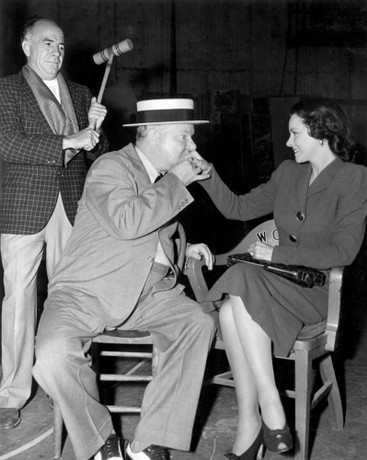
La Cava and W. C. Fields first of their two films together, and the start of a lifelong friendship. There is very much of Fields’ vaudevillian character in So’s Your Old Man as is La Cava’s. I mentioned in my post regarding La Cava’s career in animation how Breath of a Nation (1919) is reminiscent of La Cava’s Fields films. In So’s Your Old Man the first of Fields downtrodden husbands appears as a glazier, whose demonstration of break-proof glass at a convention goes wrong. His luck appears to change after meeting a princess on the train ride home.
Paradise for Two (1927)
- Producer: Famous Players-Lasky
- Distributor: Paramount Pictures
- Director: Gregory La Cava
- Writer: J. Clarkson Miller
- Cinematographer: Edward Cronjager
- Editor: Ralph Block
- Release Date: 23/01/1927
- Running time: 70 minutes (7 reels)
- Cast:
- Richard Dix (Steve Porter)
- Betty Bronson (Sally Lane)
- Edmund Breese (Uncle Howard)
- Andre Beranger (Maurice)
- Preservation Status: Unknown, believed lost
The least successful of the La Cava and Dix films. “Richard Dix and Betty Bronson bring new light and gayety to an old plot. It’s the antique tale of the gay bachelor who must marry to please his rich uncle. Richard Dix is developing steadily as a comedian. His work has style and finesse in this newest version of the young man who must get married within a specified time in order to inherit a legacy. The story, of course, is hackneyed; but, between Mr. Dix, Betty Bronson and the resourceful director, Gregory La Cava, the comedy assumes real proportions of humor and entertainment. Incidentally, a word for Miss Bronson. This young woman, who possesses a real sense of comedy, isn’t getting the breaks she deserves. The rest of the small cast is admirable: Edmund Breese being the benevolent uncle with the legacy, and .\ndre Beranger the booking agent who engages Miss Bronson to act the role of Dix’s make-believe wife. You can guess the complications.” – Photoplay magazine, May 1927
Running Wild (1927)
- Producer: Paramount Pictures
- Distributor: Paramount Pictures
- Director: Gregory La Cava
- Writer: Gregory La Cava (original screen story), Roy Briant (scenario & intertitles)
- Cinematographer: Paul Vogel
- Editor: Ralph Black
- Release Date: 20/08/1927
- Running time: 65 minutes (7 reels)
- Cast:
- W. C. Fields (Elmer Finch)
- Mary Brian (Mary Finch)
- Claud Buchanan (Dave Harvey)
- Marie Shotwell (Mrs. Finch)
- Barnett Raskin (Junior)
- Frederick Burton (Mr Harvey)
- J. Moy Bennett (Mr. Johnson)
- Frank Evans (Amos Barker)
- Edward Roseman (Arvo the Hypnotist)
- Tom Madden (Truck Driver)
- Rex the dog
- Preservation Status: Extant. Print survives at the Library of Congress. Blu-ray here
W. C. Fields plays the downtrodden patriarch of the Finch family, when, after hypnosis, “gains the courage of a lion”, and gets hypnotised to become a champion boxer. Without his distinct voice, the silents of W. C. Fields do feel rather odd, but the strength of La Cava’s tempo and structure and his similarity with Fields’ persona bolster these films.
Tell It to Sweeney (1927)
- Producer: Paramount Famous Lasky
- Distributor: Paramount Pictures
- Director: Gregory La Cava
- Assistant Director: Ralph Cedar
- Writer: Percy Heath, Kerry Clarke, Al Boasberg, Vernon Smith, Eugene DeRue, Norman Z. McLeod
- Cinematographer: H. Kinley Martin
- Editor: Louis D. Lighton, James Wilkinson
- Camera Operator: Paul Perry
- Second Camera Operator: Buddy Williams
- Production Manager: Richard Blaydon
- Release Date: 24/09/1927
- Running time: 60 minutes (6 reels)
- Cast:
- George Bancroft (Cannonball Casey)
- Chester Conklin (Luke Beamish)
- Jack Luden (Jack Sweeney)
- Doris Hill (Doris Beamish)
- Franklin Bond (Superintendent Dugan)
- William H. Tooker (Old Man Sweeney)
- Preservation Status: Extant. Print survives in the Gosfilmofond collection
Chester Conklin and George Bancroft are railroad engineers on the same road, the former operating old Isobel, and the later in charge of a modern train, the Mogul. Conklin has an attractive daughter, Doris Hill, who is engaged to Jack Luden, and Bancroft meets her and falls in love in a crude way. Hill’s rejection of Bancroft ends in a wrestling match between Bancroft and Conklin. A few fun publicity stories came out during the production of this film, which I’ve attached below.
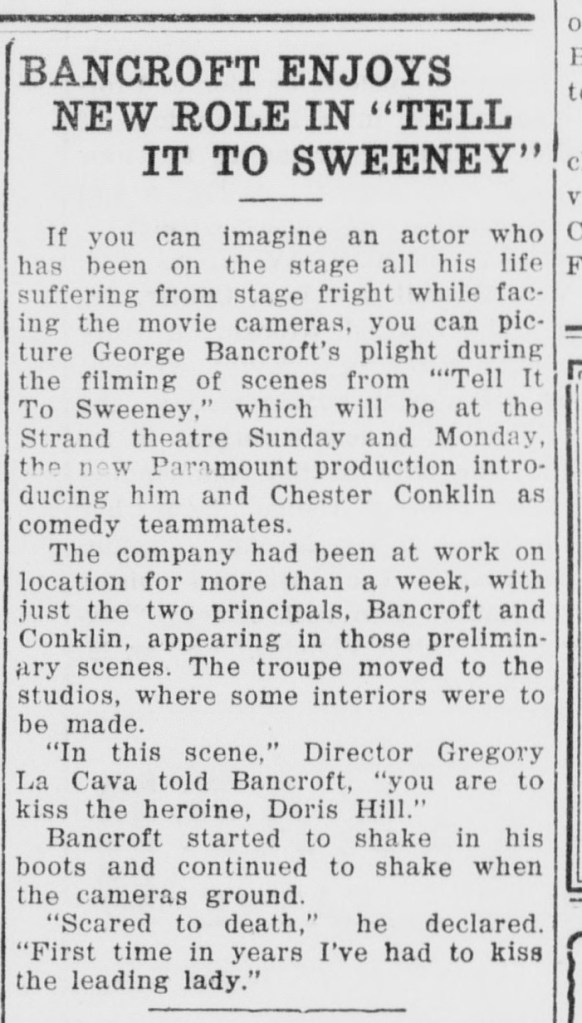
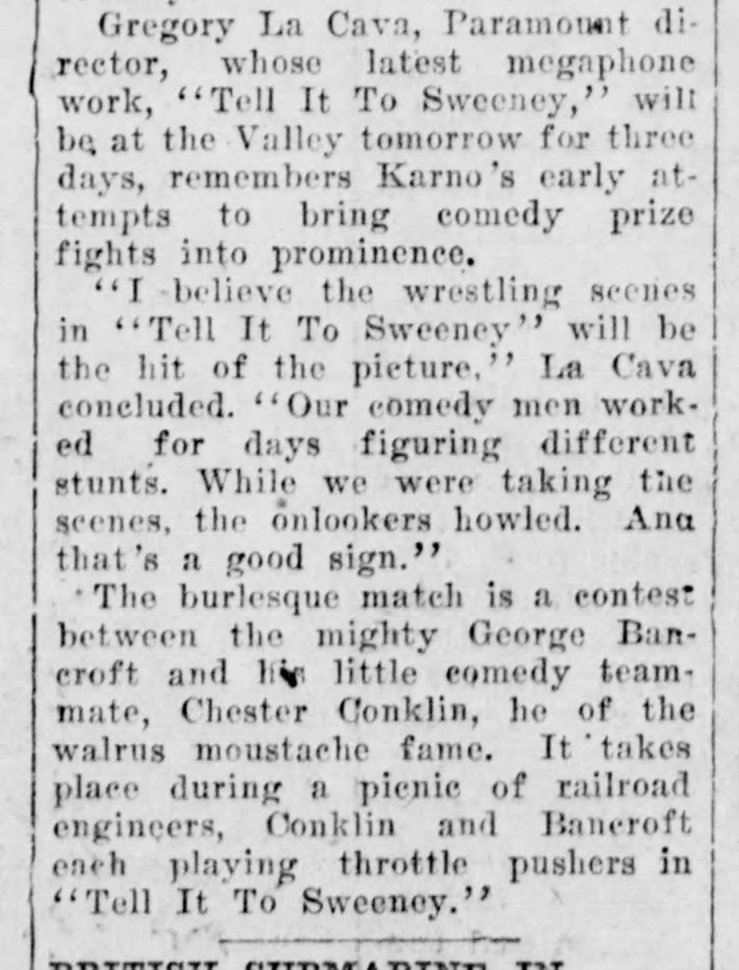
The Gay Defender (1927)
- Producer: Famous Players-Lasky
- Distributor: Paramount Pictures
- Director: Gregory La Cava
- Writer: Ray Harris, Sam Mintz, Kenneth Raisbeck, Grover Jones (story), George Marion, Jr. and Herman J. Mankiewicz (inter titles)
- Cinematographer: Edward Cronjager
- Camera Operator: Archie Stout
- Editor: B. F. Zeidman, Otho Lovering
- Costume Designer: A. McDonald
- Makeup: Sam Kaufman
- Release Date: 10/12/1927
- Running time: 70 minutes (7 reels)
- Cast:
- Richard Dix (Joaquin Murrieta)
- Thelma Todd (Ruth Ainsworth)
- Fred Kohler (Jack Hamby)
- Jerry Mandy (Chombo)
- Robert Brower (Ferdinand Murrieta)
- Harry Holden (Padre Sebastian)
- Fred Esmelton (Commissioner Ainsworth)
- Frances Raymond (Aunt Emily)
- Ernie Adams (Bart Hamby)
- Agustina Lopez (Maid)
- Preservation Status: Unknown, believed lost
The last of La Cava’s films with Dix. The Gay Defender take place in California in 1848, where Dix plays the figure of Joaquin Murrieta, son of a landowner of Spanish origin, who falls in love with Ruth Ainsworth (Thelma Todd). daughter of the Territorial Commissioner of the United States. Chombo, Joaquin’s servant, surprises Bart Hamby stealing gold from the Murrieta property, but Joaquin does not give importance to the matter and sets him free. Jake, Bart’s brother, challenges Joaquin to a duel, but the confrontation ends in a draw. Jake tries to convince Ainsworth to be his accomplice in the illegal confiscation of gold; Before his refusal, he shoots him with Joaquin’s gun. When he goes to see Ainsworth to ask for his daughter’s hand, he is arrested and accused of murder. Joaquin escapes and becomes a fugitive, returning as a disguised vigilante (That The Mark of Zorro influence was still strong), steals the gold stolen by Jake’s bandits and gives it to the town’s poor. The bandits use Ruth to bait Joaquin and upon saving Ruth, she discovers that he did not kill her father and they marry.
Feel My Pulse (1928)
- Producer: Gregory La Cava, Paramount Famous Lasky (Jesse L. Lasky, Adolph Zukor, with associate producer B. P. Schubert)
- Distributor: Paramount Pictures
- Director: Gregory La Cava
- Assistant Director: Joe Dill, Arthur Jacobson
- Writer: Nicholas T. Barrows, Keene Thompson, George Marion, Jr. (intertitles), Raymond Cannon, Percy Heath. From the story “Wooden Dollars” by Howard Emmett Rogers
- Cinematographer: J. Roy Hunt
- Camera Operator: Harry Hallenberger
- Camera Assistant: Eddie Adams, George Clemens
- Editor: E. Lloyd Sheldon, Tay Malarkey
- Release Date: 26/02/1928
- Running time: 86 minutes (6 reels)
- Cast:
- Bebe Daniels (Barbara Manning)
- Richard Arlen (Wallace Roberts/Her Problem)
- William Powell (Phil Todd/Her Nemesis)
- Melbourne MacDowell (Her Uncle Wilberforce)
- George Irving (Her Uncle Edgar)
- Charles Sellon (Sylvester Zilch/Her Sanitarium’s Caretaker)
- Heinie Conklin (Thirsty McGulp/Her Patient)
- Preservation Status: Extant. Available to watch online here
Feel My Pulse is probably my favourite of La Cava’s surviving silent films. I was reading John Gillett’s notes for the 1976 Gregory La Cava season at the BFI, which perfectly encasuplates what’s so special about this film to me: “Although NFT audiences are now familiar with much of La Cava’s work in the late 1930s, the early period is now only being slowly filled In. He was clearly a highly Inventive silent director and FEEL MY PULSE is another highly praised film made about the same time. An eccentric farcical affair about a young girl brought up to think herself a chronic invalid who is “liberated’ by her guardian from Texas and sent to a sanatorium which turns out to be in the hands of bootleggers. The Bioscope review at the time comments on the promising initial situation of “the heroine being brought up in an atmosphere of disinfectants so that she may develop Into a germ-proof woman. Bebe Daniels displays delightful docility as a malade imaginaire and afterwards amazing agility when the bootleggers are unmasked and attacked.” The review singles out as particularly noteworthy “the slow-motion picture of the bootleggers, floating and curveting among their barrels in graceful aerial evolutions.” an image suggesting that La Cava’s feeling for animation remained with him in the later stages of his career. After a slightly slow start, the film manages to pack in a good deal of comic business when the story gets under way. Before the main sanatorium scenes, there is the neatly staged episode of Bebe Daniels’ adventures on the river, an excellent example of La Cava’s skill in plotting gags which reaches an hilarious climax in the final fracas, in the sanatorium. Throughout, Miss Daniels plays with admirable composure and gauges the tone of scenes very precisely, as more of her silent work is uncovered, it is clear that she was a very talented and versatile actress.”
Half A Bride (1928)
- Producer: Paramount Famous Lasky (Jesse L. Lasky, Adolph Zukor, with associate producer B. P. Schulberg)
- Distributor: Paramount Pictures
- Director: Gregory La Cava
- Assistant Director: Russell Mathews
- Writer: Doris Anderson, Percy Heath, John Kirkland, Julian Johnson (intertitles). Based on the 1927 story “White Hands” by Arthur Stringer
- Cinematographer: Victor Milner
- Editor: Verna Willis
- Camera Operator: Rex Wimpy
- Camera Assistant: William Muller, James Knott
- Production Chief: Dan Keefe
- Costume Designer: Travis Banton
- Release Date: 16/06/1928
- Running time: 67 minutes (7 reels)
- Cast:
- Esther Ralston (Patience Winslow)
- Gary Cooper (Captain Edmunds)
- William Worthington (Mr. Winslow)
- Freeman Wood (Jed Sessions)
- Mary Doran (Betty Brewster)
- Guy Oliver (Chief Engineer)
- Ray Gallagher (Second Engineer)
- Preservation Status: Unknown, believed lost. Behind the scenes footage found from Esther Ralston’s home movies
“Patience Winslow, a spoiled darling of the rich, is marooned on a desert island in the Pacific with the handsome skipper of her yacht, Captain Edmunds. Patience, it seems, was enjoying a honeymoon cruise with her much-older husband when the mishap occurred. Since they are the only inhabitants of the island, they enter into a trial marriage (in name only) for three months, soon concluding that any man would fall in love with any girl if they were alone on an island together. Eventually, however, they are rescued and returned to the mainland, only to find they cannot live without each other.” – Homer Dickens, The Films of Gary Cooper
– Sound Film –
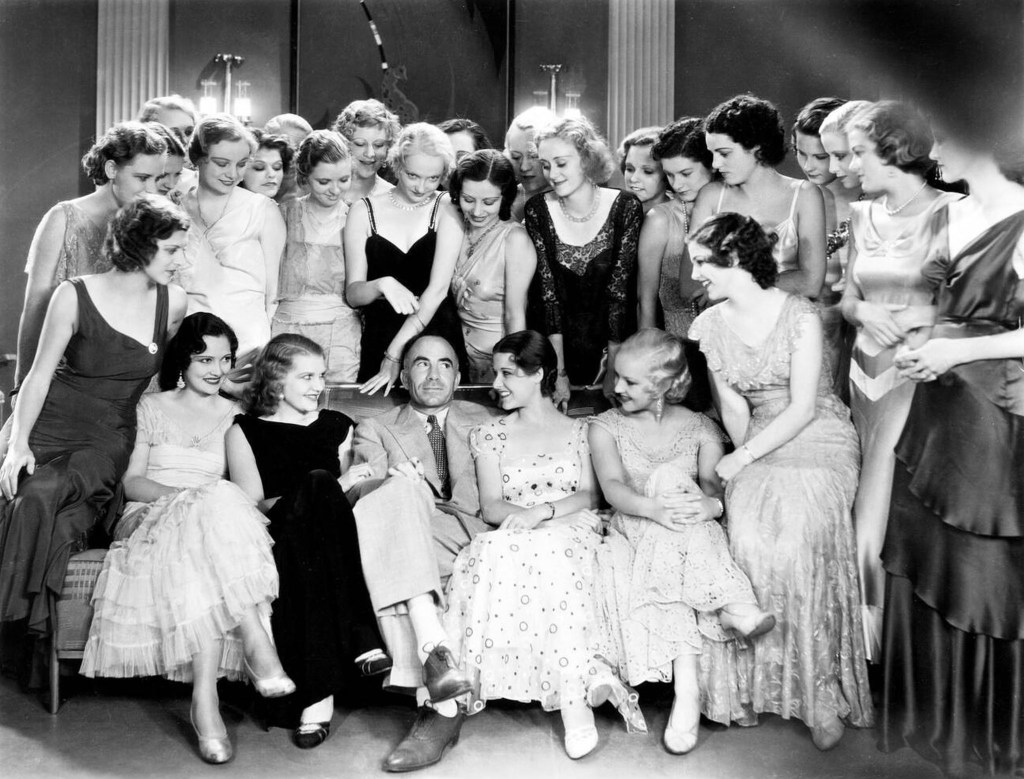
Saturday’s Children (1929)
- Producer: Warner Brothers-First National, Walter Morosco
- Executive Producer: Jack L. Warner
- Distributor: First National Pictures
- Director: Gregory La Cava
- Writer: Forrest Halsey, Gene Towne, Gregory La Cava. Adapted from the 1927 play, Saturday’s Children, by Maxwell Anderson
- Cinematographer: John F. Seitz
- Art Director: Max Parker
- Sound system: Movietone
- Premiere of silent version: 10/03/1929
- Premiere of sound version: 14/04/1929
- Release Date:
- Running time: 90 minutes
- Cast:
- Corinne Griffith (Bobbie Halvey)
- Grant Withers (Jim O’Neill)
- Albert Conti (Mr. Mengle)
- Alma Tell (Florrie)
- Lucien Littlefield (Willie)
- Charles Lane (Mr. Henry Halvey)
- Anne Schaeffer (Mrs. Halvey)
- Marcia Harris (Mrs. Gorlick)
- Preservation Status: Unknown, believed lost
Ann Silver details how the screen adaptation was different to the original stage production in the column “The Current Cinema” for The Brooklyn Daily Times, April 29th, 1929, declaring that “one who has seen the stage production will easily discern where Mr. La Cava has improved upon the script, inserting bits of comedy and putting in human touches where they count most.” Silver pointing out La Cava’s “human touches” is possibly the first to note this specific element in La Cava’s films that make it a La Cava film.
Big News (1929)
- Producer: Pathé Exchange
- Executive Producer: Ralph Block
- Director: Gregory La Cava
- Writer: Jack Jungmeyer, Walter DeLeon,
- Editor: Doane Harrison
- Cinematographer: Norbert Brodine, John J. Mescall, George S. Brooks (story, For Two Cents) Frank Reicher (dialogue director)
- Art Director: Edward Jewell
- Costume Designer: Gwen Wakeling
- Sound Engineers: Denzil A. Cutler, Charles Wickes
- Sound system: RCA Photophone System
- Release date: 07/09/1929
- Running time: 66 minutes (8 reels)
- Cast:
- Robert Armstrong (Steve Banks)
- Carole Lombard, as Carol Lombard (Margie Banks)
- Charles Sellon (J.W. Addison)
- Louis Payne (Hensel)
- Wade Boteler (O’Neill)
- Sam Hardy (Joe Reno)
- Helen Ainsworth (Vera)
- Warner Richmond (Phelps)
- Herbert Clark (Pells)
- Tom Kennedy (Officer Ryan)
- Gertrude Sutton (Helen)
- James Donlan (Deke)
- Colin Chase (Birn)
- Robert Dudley (Telegraph editor)
- Fred Behrle (Elevator man)
- George Hayes (Hoffman)
- Vernon Steele (Reporter)
- Clarence Wilson (Coroner)
- Gary Leon (uncredited)
- Lew Ayres (uncredited)
- Richard Cramer (uncredited)
- Preservation Status: Extant. Available to watch online here.
His First Command (1929)
- Producer: Pathé Exchange
- Executive Producer: Ralph Block
- Director: Gregory La Cava
- Writer: Jack Jungmeyer, James Gleason, Gregory La Cava (dialogue)
- Cinematographer: Arthur Miller, John Mescall
- Editor: Doane Harrison
- Art Director: Edward C. Jewell
- Costume Designer: Gwen Wakeling
- Production Manager: George Webster
- Musical Director: Josiah Zuro
- Sound Engineers: Earl Wolcott, Denzil A. Cutler
- Sound system: RCA Photophone System
- Release date: 21/12/1929
- Running time: 65 minutes
- Cast:
- William Boyd (Terry Culver)
- Dorothy Sebastian (Judy Gaylord)
- Alphonse Ethier (Colonel Gaylord)
- Gavin Gordon (Lieutenant Allan)
- Paul Hurst (Sergeant Westbrook)
- Helen Parrish (Jane Sargent)
- Charles Moore (Homer)
- Howard Hickman (Major Hall)
- Rose Tapley (Mrs. Pike)
- Mabel Van Buren (Mrs. Sargent)
- Jack Pennick (Rookie, uncredited)
- Jack Raymond (Rookie, uncredited)
- Preservation status: Extant. Available to watch online here.
Laugh and Get Rich (1931)
- Producer: RKO Radio Pictures
- Executive Producer: William LeBaron
- Associate Producer: Douglas MacLean
- Distributor: RKO Radio Pictures
- Director: Gregory La Cava
- Writer: Douglas MacLean, Al Jackson, Gregory La Cava (uncredited), Ralph Spence (additional dialogue)
- Cinematographer: Jack MacKenzie
- Costume Designer: Max Rée
- Editor: Jack Kitchin
- Sound: John E. Tribby
- Sound system: RCA Photophone System
- Release date: 27/03/1931
- Running time: 72 minutes
- Cast:
- Edna May Oliver (Sarah Austin)
- Hugh Herbert (Joe Austin)
- Dorothy Lee (Alice Austin)
- Russell Gleason (Larry Owens)
- John Harron (Bill Hepburn)
- Charles Sellon (Biddle)
- George Davis (Vincentini)
- Robert Emmett Keane (Phelps)
- Maude Fealy (Miss Teasdale)
- Louise Mackintosh (Cassandra Palfrey)
- Lita Chevret (Abigail)
- Wade Boteler (Detective Flannery, uncredited)
- Rochelle Hudson (Miss Jones, uncredited)
- Ivan Lebedeff (Count Dimitriff, uncredited)
- Preservation status: Extant.
Smart Woman (1931)
- Producer: RKO Radio Pictures
- Executive Producer: William LeBaron
- Associate Producer: Bertram Millhauser
- Distributor: RKO Radio Pictures
- Director: Gregory La Cava
- Writer: Salisbury Field, Bertram Millhauster, Bernard Schubert, Wallace Smith, Gregory La Cava (all except Field uncredited). Based on the 1930 play Nancy’s Private Affair by Myron Coureval Fagan
- Cinematographer: Nick Musuraca
- Editor: Ann McKnight
- Scenery and Costume Designer: Max Rée
- Sound: Clem Portman
- Sound System: RCA Photophore System
- Release date: 12/09/1931
- Running time: 68 minutes
- Cast:
- Mary Astor (Nancy Gibson)
- Robert Ames (Donald Gibson)
- John Halliday (Guy Harrington)
- Edward Everett Horton (Billy Ross)
- Noel Francis (Peggy Preston)
- Ruth Weston (Sally Gibson Ross)
- Gladys Gale (Mrs. Preston)
- Alfred Cross (Brooks)
- Lillian Harmer (Mrs. Windleweaver)
- Preservation status: Extant.
Symphony of Six Million (1932)
- Producer: RKO Radio Pictures
- Executive Producer: David O. Selznick
- Associate Producer: Pandro S. Berman
- Director: Gregory La Cava
- Writer: Fannie Hurst, C. J. Danielson, Bernard Schubert, J. Walter Ruben, Jane Murfin, Louis Stevens, James Seymour (additional dialogue)
- Cinematographer: Leo Tover
- Camera Operator: Edward Henderson, Russell Metty
- Editor: Archie F. Marshek
- Sound: George Ellis
- Sound system: RCA Photophone System
- Composer: Max Steiner
- Art Director: Carroll Clark
- Production Director: Val Paul, J.R. Crone
- Release date: 14/04/1932
- Running time: 93 minutes
- Cast:
- Irene Dunne (Jessica)
- Ricardo Cortez (Dr. Felix Klauber)
- Anna Appel (Hannah Klauber)
- Gregory Ratoff (Meyer Klauber)
- Noel Madison (Magnus Klauber)
- Lita Chevret (Birdie Klauber)
- John St. Polis (Dr. Schifflen)
- Julie Hayden (Miss Grey – Felix’s Receptionist)
- Helen Freeman (Miss Spencer – Felix’s Nurse)
- Josephine Whittell (Mrs. Gifford)
- Oscar Apfel (Doctor)
- Eddie Phillips (Lipton, Birdie’s Husband)
- Preservation status: Extant.
The Age of Consent (1932)
- Producer: RKO Radio Pictures
- Executive Producer: David O. Selznick
- Associate Producer: Pandro S. Berman
- Director: Gregory La Cava
- Writer: Sarah Y. Mason, Francis Cockrell, H. N. Swanson and Gregory La Cava adapting with no credit from the 1929 play “Crossroads” by Martin Flavin
- Cinematographer: J. Roy Hunt
- Camera Operator: Eddie Pyle
- Editor: Jack Kitchin
- Art Director: Carroll Clark
- Sound recordist: Denzil A. Cutler
- Sound System: RCA Photophone
- Release date: 19/08/1932
- Running time: 63 minutes
- Cast:
- Dorothy Wilson (Betty Cameron)
- Arline Judge (Dora Swale)
- Richard Cromwell (Michael Harvey)
- Eric Linden (Duke Galloway)
- John Halliday (Professor David Matthews)
- Aileen Pringle (Barbara Griffith)
- Reginald Barlow (Mr. Swale)
- Betty Grable (girl in dorm, uncredited)
- Grady Sutton (student, uncredited)
- Jack Wills (uncredited)
- Tony Jurich (uncredited)
- Phyllis Fraser (student, uncredited)
- Mildred Shay (student, uncredited)
- Howard Hickman (Doctor, uncredited)
- Preservation status: Extant.
The Half Naked Truth (1932)
- Producer: RKO Radio Pictures
- Executive Producer: David O. Selznick
- Associate Producer: Pandro S. Berman
- Director: Gregory La Cava
- Writer: Gregory La Cava, Corey Ford, Bartlett Cormack (uncredited), Ben Markson and H.N. Swanson (story), David Freedman and Harry Reichenbach (suggested by “The Anatomy of Ballyhoo: Phantom Fame (1931)”)
- Cinematographer: Bert Glennon
- Camera Operator: Eddie Pyle
- Editor: Charles L. Kimball
- Set Designer: Carroll Clark
- Choreographer: Ernest Belcher
- Dialogue Director: Ethel Fahne
- Assistant Director: Hugh Walker
- Sound recordist: John E. Tribby
- Music: Max Steiner
- Hair: Zena Saving
- Makeup: Sam Kaufman, Blossom Black, Mae Mark
- Sound system: RCA Photophone
- Release date: 30/12/1932
- Running time: 77 minutes
- Cast:
- Lupe Velez (Teresita)
- Lee Tracy (Jimmy Bates)
- Eugene Pallette (Achilles)
- Frank Morgan (Merle Farrell)
- Shirley Chambers (Gladys aka Ella Beebee)
- Franklin Pangborn (Mr. Wellburton – Hotel Clerk)
- Robert McKenzie (Colonel Munday)
- Mary Mason (Farrell’s Secretary)
- Charles Dow Clark (Sheriff, uncredited)
- James Donlan (Lou – Press Agent – uncredited)
- Theresa Harris (Emily – Teresita’s Maid, uncredited)
- Brooks Benedict (Lion Gag Congratulator, uncredited)
- Frank Austin (First Man with Guilty Conscience, uncredited)
- Henry Roquemore (Second Man with Guilty Conscience, uncredited)
- Bess Flowers (Bates’ Secretary, uncredited)
- Max Steiner (Conductor, uncredited)
- Cyril Ring (Phelps, uncredited)
- Frank Marlowe (Stagehand, uncredited)
- Thomas E. Jackson (Marshall – Farrell’s Assistant, uncredited)
- Si Jenkins (Rube with a Beard in Audience, uncredited)
- William H. O’Brien (Hotel Waiter, uncredited)
- Cliff Saum (Ticket Seller, uncredited)
- Asta (Dog in Butcher Shop, uncredited)
- Preservation status: Extant.
Gabriel over the White House (1933)
- Producer: Cosmopolitan Productions,Metro-Goldwyn Mayer
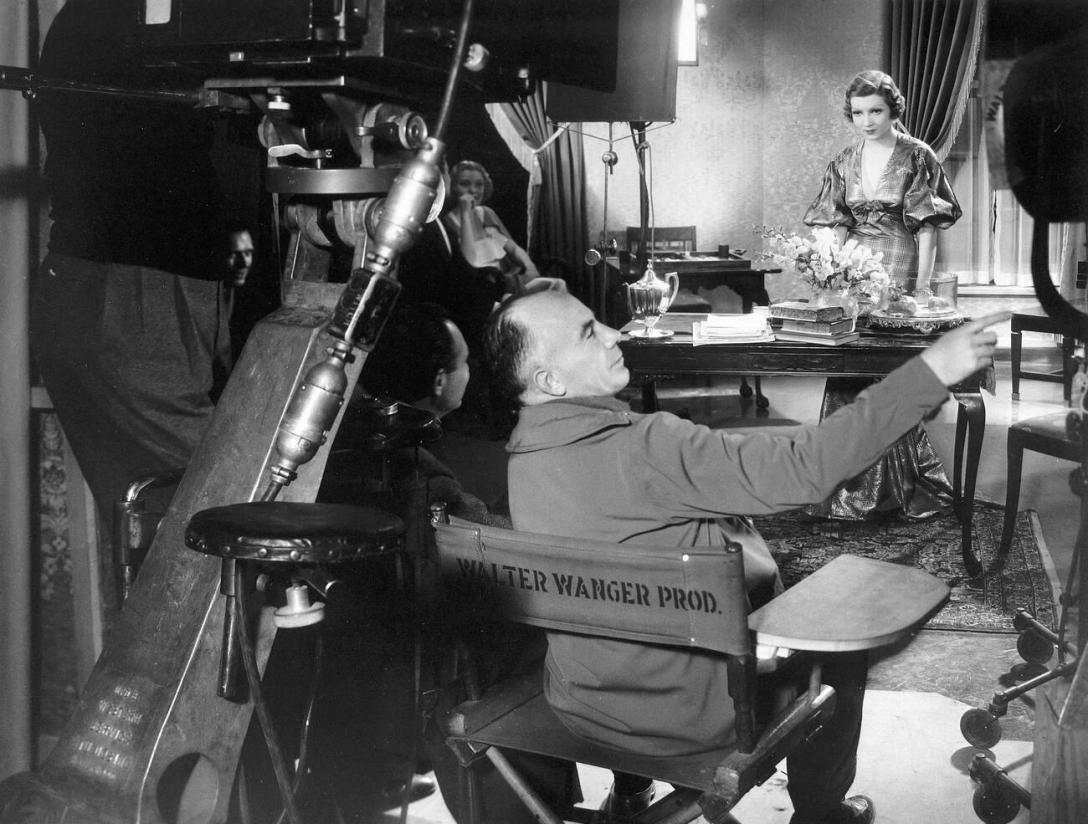
- Executive Producer: Walter Wanger
- Associate Producer: Eddie Mannix
- Director: Gregory La Cava
- Writer: Carey Wilson, Gregory La Cava (uncredited) Bertram Bloch (additional dialogue), Based on the 1933 novel Gabriel over the White House: A Novel of the Presidency by T.F. Tweed
- Cinematographer: Bert Glennon
- Editor: Basil Wrangell
- Art Director: Cedric Gibbons
- Costume Designer: Adrian
- Sound: Douglas Shearer
- Sound system: Western Electric
- Release date: 31/03/1933
- Running time: 86 minutes
- Cast:
- Walter Huston (Hon. Judson Hammond – The President of the United States)
- Karen Morley (Pendola Molloy)
- Franchot Tone (Hartley Beekman – Secretary to the President)
- Arthur Byron (Jasper Brooks – Secretary of State)
- Dickie Moore (Jimmy Vetter)
- C. Henry Gordon (Nick Diamond)
- David Landau (John Bronson)
- Samuel S. Hinds (Dr. H.L. Eastman)
- William Pawley (Borell)
- Jean Parker (Alice Bronson)
- Claire Du Brey (Nurse)
- Oscar Apfel (German Delegate to Debt Conference, uncredited)
- Mischa Auer (Mr. Thieson, uncredited)
- Preservation status: Extant.
Bed of Roses (1933)
- Producer: RKO Radio Pictures
- Executive Producer: Pandro S. Berman
- Associate Producer: Merian C. Cooper
- Director: Gregory La Cava
- Writer: Wanda Tuchock, Eugene Thackrey, Gregory La Cava (uncredited)
- Cinematographer: Charles Rosher
- Camera Operator: Frank Redman
- Editor: Basil Wrangell
- Art Director: Van Nest Polglase, Charles M. Kirk
- Sound recordist: George D. Ellis
- Music: Max Steiner
- Sound system: RCA Victor
- Release date: 29/06/1933
- Running time: 70 minutes
- Cast:
- Constance Bennett (Lorry Evans)
- Joel McCrea (Dan)
- John Halliday (Stephen Paige)
- Pert Kelton (Minnie Brown)
- Samuel S. Hinds (Father Doran)
- Franklin Pangborn (Floorwalker)
- Tom Herbert (Salesman Ogelthorpe, as Tom Francis)
- Jane Darwell (Mrs. Webster – Head Prison Matron, uncredited)
- Preservation status: Extant.
Gallant Lady (1934)
- Producer: 20th Century Pictures, Inc.
- Executive Producer: Darryl F. Zanuck
- Associate Producer: William Goetz, Raymond Griffith
- Director: Gregory La Cava
- Writer: Sam Mintz, Gilbert Emery (original story), Gregory La Cava (uncredited)
- Cinematographer: J. Peverell Marley
- Costume Designer: Gwen Wakeling
- Camera Operator: Harry Davis
- Editor: Barbara McLean
- Music: Alfred Newman
- Sound: Al Blodgett, Ed Sullivan
- Sound system: Western Electric
- Release date: 05/01/1934
- Running time: 84 minutes
- Cast:
- Ann Harding (Sally Wyndham)
- Clive Brook (Dan Pritchard)
- Otto Kruger (Phillip Lawrence)
- Dickie Moore (Deedy Lawrence)
- Tullio Carminati (Count Mario Carniri)
- Janet Beecher (Maria Sherwood)
- Betty Lawford (Cynthia Haddon)
- Preservation status: Extant.
The Affairs of Cellini (1934)
- Producer: 20th Century Pictures
- Executive Producer: Darryl F. Zanuck
- Associate Producer: William Goetz, Raymond Griffith
- Director: Gregory La Cava
- Writer: Bess Meredith, Frédérique De Grésac. Based on the 1924 play The Firebrand of Florence by Edwin Justus Mayer
- Cinematographer: Charles Rosher
- Editor: Barbara McLean
- Costume Designer: Gwen Wakeling
- Art Director: Richard Day, Joseph Wright
- Sound: Thomas McLean, Ed Sullivan
- Music: Alfred Newman
- Sound system: Western Electric
- Release date: 24/08/1934
- Running time: 80 minutes
- Cast:
- Constance Bennett (Duchess of Florence)
- Fredric March (Benvenuto Cellini)
- Frank Morgan (Alessandro – Duke of Florence)
- Fay Wray (Angela)
- Vince Barnett (Ascanio)
- Jessie Ralph (Beatrice)
- Louis Calhern (Ottaviano)
- Jay Eaton (Polverino)
- Paul Harvey (Emissary)
- Jack Rutherford (Captain of the Guards)
- Irene Ware (Daughter of the Royal House of Bocci)
- Lucille Ball (Lady in Waiting, uncredited)
- Bess Flowers (Lady in Waiting, uncredited)
- Preservation status: Extant.
What Every Woman Knows (1934)
- Producer: Metro-Goldwyn-Mayer
- Executive Producer: Irving G. Thalberg
- Distributor: Loew’s Inc.
- Director: Gregory La Cava
- Writer: Monckton Hoffe, John Meehan, James Kevin McGuiness, Gregory La Cava (uncredited), Marian Ainslee (contributor to dialogue, uncredited). Based on the 1908 play What Every Woman Knows by J. M. Barrie
- Cinematographer: Charles Rosher
- Editor: Blanche Sewell
- Art Director: Cedric Gibbons
- Costume Designer: Adrian
- Music: Herbert Stothart
- Sound: Douglas Shearer
- Sound system: Western Electric
- Assistant Director: Lesley Selander
- Release date: 26/10/1934
- Running time: 92 minutes
- Cast:
- Helen Hayes (Maggie Wylie)
- Brian Aherne (John Shand)
- Madge Evans (Lady Sybil Tenterden)
- Lucile Watson (La Contessa la Brierre)
- Dudley Digges (James Wylie)
- Donald Crisp (Mr. David Wylie)
- David Torrence (Alick Wylie)
- Henry Stephenson (Charles Venables)
- Lowden Adams (Venables’ Secretary, uncredited)
- Janet Murdoch (Shand’s Mother, uncredited)
- William Stack (Tenterden – Sybil’s Brother, uncredited)
- Preservation status: Extant.
Private Worlds (1935)
- Producer: Walter Wanger Productions
- Executive Producer: Walter Wanger
- Distributor: Paramount Pictures
- Director: Gregory La Cava
- Writer: Gregory La Cava, Lynn Starling, Gladys Unger (additional dialogue). Based on the 1934 novel Private Worlds by Phyllis Bottome
- Cinematographer: Leon Shamroy
- Editor: Aubrey Scotto
- Costumes: Helen Taylor, Jim Smith
- Sound: Hugo Grenzbach
- Sound system: Western Electric
- Release date: 27/03/1935
- Running time: 84 minutes
- Cast:
- Claudette Colbert (Dr. Jane Everest)
- Charles Boyer (Dr. Charles Monet)
- Joan Bennett (Sally McGregor)
- Helen Vinson (Claire Monet)
- Joel McCrea (Dr. Alex McGregor)
- Jean Rouverol (Carrie Flint)
- Esther Dale (Matron)
- Guinn ‘Big Boy’ Williams (Jerry)
- Dora Clement (Bertha Hirst)
- Sam Godfrey (Tom Hirst)
- Samuel S. Hinds (Dr. Arnold)
- Theodore von Eltz (Dr. Harding)
- Stanley Andrews (Dr. Barnes)
- Maurice Murphy (Boy in car)
- Eleanore King (Carrie’s nurse)
- Irving Bacon (McLean, male nurse)
- Julian Madison (Johnson)
- Harry C. Bradley (Johnson’s father)
- Leila McIntyre (Mrs. Marley)
- Nick Shaid (Arab patient)
- Arnold Gray (Clarkson)
- Monte Vandergrift (Dawson)
- Bess Flowers (Betsy – patient, uncredited)
- Preservation status: Extant.
She Married Her Boss (1935)
- Producer: Columbia Pictures
- Executive Producer: Harry Cohn
- Director: Gregory La Cava
- Writer: Sidney Buchman, Thyra Samter Winslow (story), Gregory La Cava (uncredited)
- Cinematographer: Leon Shamroy
- Editor: Richard Cahoon
- Art Director: Stephen Goosson
- Costume Designer: Robert Kalloch
- Sound: Edward Bernds
- Sound system: Western Electric
- Release date: 19/09/1935
- Running time: 88 minutes
- Cast:
- Claudette Colbert (Julia Scott)
- Melvyn Douglas (Richard Barclay)
- Michael Bartlett (Lennie Rogers)
- Raymond Walburn (Franklyn)
- Jean Dixon (Martha Pryor)
- Katharine Alexander (Gertrude Barclay)
- Edith Fellows (Annabel Barclay)
- Clara Kimball Young (Parsons)
- Grace Hayle (Agnes Mayo)
- Charles Arnt (Victor Jessup)
- Preservation status: Extant.
My Man Godfrey (1936)
- Producer: Universal Productions
- Executive Producer: Charles R. Rogers
- Producer: Gregory La Cava
- Director: Gregory La Cava
- Writer: Morrie Ryskind, Eric Hatch (adapting his 1935 novel 1101 Park Avenue
1935 novel), Gregory La Cava (uncredited), Zoë Akins and Robert Presnell Sr. (contributing writers, uncredited) - Editor: Ted J. Kent, Russell F. Schoengarth
- Cinematographer: Ted Tetzlaff
- Art Director: Charles D. Hall
- Costume Designer: Travis Banton (Lombard’s gowns), Brymer
- Sound: Homer G. Tasker, Joe Lapis
- Sound system: Western Electric
- Release date: 06/09/1936
- Running time: 94 minutes
- Cast:
- Carole Lombard (Irene Bullock)
- William Powell (Godfrey)
- Alice Brady (Angelica Bullock)
- Gail Patrick (Cornelia Bullock)
- Eugene Pallette (Alexander Bullock)
- Jean Dixon (Molly)
- Alan Mowbray (Tommy Gray)
- Mischa Auer (Carlo)
- Pat Flaherty (Mike)
- Robert Light (Faithful George)
- Ernie Adams (Forgotten Man, uncredited)
- Reginald Mason (Mayor Courtney, uncredited)
- Grady Sutton (Charlie Van Rumple, uncredited)
- Franklin Pangborn (Guthrie, uncredited)
- Bess Flowers (Mrs. Merriweather, uncredited)
- Preservation status: Extant.
Stage Door (1937)
- Producer: RKO Radio Pictures
- Executive Producer: Pandro S. Berman
- Director: Gregory La Cava
- Writer: Morrie Ryskind, Anthony Veiller, Gregory La Cava (uncredited), S.K. Lauren (contributing writer, uncredited), William Slavens McNutt (contributing writer, uncredited), George Seaton (contributing writer, uncredited). Based on the 1936 play Stage Door by Edna Ferber, George S. Kaufman
- Cinematographer: Robert De Grasse
- Editor: William Hamilton
- Art Director: Van Nest Polglase
- Costume Designer: Muriel King
- Sound: John L. Cass
- Sound system: RCA Victor
- Release date: 08/10/1937
- Running time: 92 minutes
- Cast:
- Katharine Hepburn (Terry Randall)
- Ginger Rogers (Jean Maitland)
- Adolphe Menjou (Anthony Powell)
- Gail Patrick (Linda Shaw)
- Constance Collier (Miss Luther)
- Andrea Leeds (Kay Hamilton)
- Samuel S. Hinds (Henry Sims)
- Lucille Ball (Judith Canfield)
- Phyllis Kennedy (Hattie)
- Eve Arden (Eve)
- Ann Miller (Annie)
- Margaret Early (Mary Lou)
- Jean Rouverol (Dizzy)
- Norma Drury (Olga)
- Franklin Pangborn (Harcourt)
- William Corson (Bill)
- Pierre Watkin (Carmichael)
- Grady Sutton (Butch)
- Jack Carson (Mr. Milbanks)
- Frank Reicher (Stage Director)
- Elizabeth Dunne (Mrs. Orcutt)
- Betty Jane Rhodes (Ann)
- Peggy O’Donnell (Susan)
- Jan Wiley (Madeline)
- Katharine Alexander (Cast of Stage Play)
- Ralph Forbes (Cast of Stage Play)
- Mary Forbes (Cast of Stage Play)
- Huntley Gordon (Cast of Stage Play)
- Preservation status: Extant.
Fifth Avenue Girl (1939)
- Producer: RKO Radio Pictures
- Executive Producer: Gregory La Cava
- Director: Gregory La Cava
- Writer: Allan Scott, Morrie Ryskind (uncredited), Gregory La Cava (uncredited)
- Cinematographer: Robert De Grasse
- Editor: William Hamilton, Robert Wise
- Art Director: Van Nest Polglase
- Costume Designer: Howard Greer, Irene Greer (uncredited)
- Music: Robert Russell Bennett
- Sound: John L. Cass
- Sound system: RCA Victor
- Release date: 24/08/1939
- Running time: 83 minutes
- Cast:
- Ginger Rogers (Mary Grey)
- Walter Connolly (Timothy Borden)
- Verree Teasdale (Martha Borden)
- James Ellison (Mike)
- Tim Holt (Tim Borden)
- Kathryn Adams (Katherine Borden)
- Franklin Pangborn (Higgins)
- Ferike Boros (Olga)
- Louis Calhern (Dr. Kessler)
- Theodore von Eltz (Terwilliger)
- Alexander D’Arcy (Maitre d’Hotel)
- Harlan Briggs (Stanton – Union Representative, uncredited)
- Steve Carruthers (Night Club Patron, uncredited)
- Jack Carson (Minnesota – a Sailor, uncredited)
- Mildred Coles (Katherine’s Girlfriend, uncredited)
- Preservation status: Extant.
Primrose Path (1940)
- Producer: RKO Radio Pictures
- Producer: Gregory La Cava
- Director: Gregory La Cava
- Writer: Allan Scott, Gregory La Cava. Based on the 1938 play Primrose Path play
by Robert H. Buckner, Walter Hart and the 1934 novel February Hill by Victoria Lincoln - Cinematographer: Joseph H. August
- Camera Operator: Charles Burke
- Editor: William Hamilton
- Art Director: Van Nest Polglase
- Costume Designer: Renié
- Music: Werner R. Heymann
- Sound: John L. Cass
- Sound system: RCA Victor
- Release date: 22/03/1940
- Running time: 93 minutes
- Cast:
- Ginger Rogers (Ellie May Adams)
- Joel McCrea (Ed Wallace)
- Marjorie Rambeau (Mamie Adams)
- Henry Travers (Gramp)
- Miles Mander (Homer)
- Queenie Vassar (Grandma)
- Joan Carroll (Honeybell)
- Vivienne Osborne (Thelma)
- Carmen Morales (Carmelita)
- Ernie Adams (Man in Bluebell, uncredited)
- Bobby Barber (Benny – Man in Diner, uncredited)
- Louise Beavers (Woman Talking to Police, uncredited)
- Jacqueline Dalya (Dalya – Carmelita’s Friend, uncredited)
- Preservation status: Extant.
Unfinished Business (1941)
- Producer: Universal Pictures
- Producer: Gregory La Cava
- Director: Gregory La Cava
- Writer: Eugene Thackrey, Gregory La Cava
- Cinematographer: Joseph Valentine
- Editor: Russell F. Schoengarth
- Art Director: Jack Otterson
- Costume Designer: Howard Greer, Vera West (uncredited)
- Sound: Bernard B. Brown
- Sound system: Western Electric
- Release date: 27/08/1941
- Running time: 96 minutes
- Cast:
- Irene Dunne (Nancy Andrews)
- Robert Montgomery (Tommy Duncan)
- Preston Foster (Steve Duncan)
- Eugene Pallette (Elmer)
- Esther Dale (Aunt Mathilda)
- Dick Foran (Frank)
- Walter Catlett (Billy Ross)
- Richard Davies (Richard)
- Kathryn Adams (Katie)
- Samuel S. Hinds (Uncle)
- June Clyde (Clarisse)
- Phyllis Barry (Shelia)
- Norma Drury (Cousin Nell – Clemson’s Friend, uncredited)
- Preservation status: Extant.
Lady in a Jam (1942)
- Producer: Universal Pictures
- Producer: Gregory La Cava
- Director: Gregory La Cava
- Writer: Eugene Thackrey, Francis M. Cockrell, Otho Lovering, Gregory La Cava (uncredited)
- Cinematographer: Hal Mohr
- Camera Operator: Len Powers
- Editor: Russell F. Schoengarth
- Art Director: Jack Otterson
- Costume Designer: Bernard Newman
- Music: Frank Skinner
- Sound: Bernard B. Brown, Joe Lapis
- Sound system: Western Electric
- Release date: 19/06/1942
- Running time: 78 minutes
- Cast:
- Irene Dunne (Jane Palmer)
- Ralph Bellamy (Stanley Gardner)
- Patric Knowles (Dr. Enright)
- Eugene Pallette (Billingsley)
- Samuel S. Hinds (Dr. Brewster)
- Queenie Vassar (Cactus Kate)
- Jane Garland (Strawberry)
- Edward McWade (Ground-Hog)
- Robert Homans (Faro Bill)
- Russell Hicks (Carter)
- Hardie Albright (Milton)
- Isabel La Mal (Josephine)
- Edward Gargan (Deputy)
- Richard Alexander (Henpecked Husband at Auto Camp, uncredited)
- Margaret Armstrong (Matron, uncredited)
- Irving Bacon (Auto Camp Proprietor, uncredited)
- William ‘Billy’ Benedict (Barker, uncredited)
- Preservation status: Extant.
Living in a Big Way (1947)
- Producer: Metro-Goldwyn-Mayer
- Executive Producer: Pandro S. Berman
- Director: Gregory La Cava
- Writer: Irving Ravetch, Gregory La Cava (screenplay and story)
- Cinematographer: Harold Rosson
- Editor: Ferris Webster
- Art Director: Cedric Gibbons, William Ferrari
- Costume Designer: Shirley Barker, Irene
- Choreographer: Stanley Donen, Gene Kelly
- Sound: Douglas Shearer
- Sound system: Western Electric
- Release date: 10/06/1947
- Running time: 104 minutes
- Cast:
- Gene Kelly (Leo Gogarty)
- Marie McDonald (Margaud Morgan)
- Charles Winninger (D. Rutherford Morgan)
- Phyllis Thaxter (Peggy Randall)
- Spring Byington (Mrs. Minerva Alsop Morgan)
- Jean Adair (Abigail Morgan)
- Clinton Sundberg (Everett Hanover Smythe)
- John Warburton (‘Skippy’ Stuart Simms)
- William ‘Bill’ Phillips (Schultz)
- Bernadene Hayes (Dolly)
- John Alexander (Attorney Ambridge)
- Phyllis Kennedy (Annie Pearl)
- Preservation status: Extant.
Notes:
- La Cava’s claim of having worked on the early Mutt and Jeff cartoons is why I have included them here, as, from what I’ve researched, La Cava did not work on them during his time at Barre Studios. My compilation of La Cava’s filmography is aligned with Tony Partearroyo and Frank Thompson’s for Filmoteca Española. The order of the Mutt and Jeff animation credits I have taken from Denis Gifford’s book “American Animated Films: The Silent Era, 1897–1929.” ↩︎
- Dunham Thorp, “Meet La Cava”, Motion Picture Classic magazine, May 1926. ↩︎
- Martini for La Cava programme at the Bergamo Film Meeting 1995. Curated by Emanuela Martini. Shelfmark: 791.484 LAC, BFI Reuben Library. ↩︎
- In Kingsley Canham’s compiling of La Cava’s filmography for the BFI’s 1976 La Cava programme, Canham writes that he found no credit for the writing of the film, and surmised with “[probably La Cava].” Pamphlet of Gregory La Cava’s filmography. Shelfmark: 791.484.LAC, 1976, BFI Conservation Centre. ↩︎
 Our Man Gregory La Cava